BLDC vs Normal Ceiling Fan Motors: How Much Can You Really Save?
 Blogs
Blogs
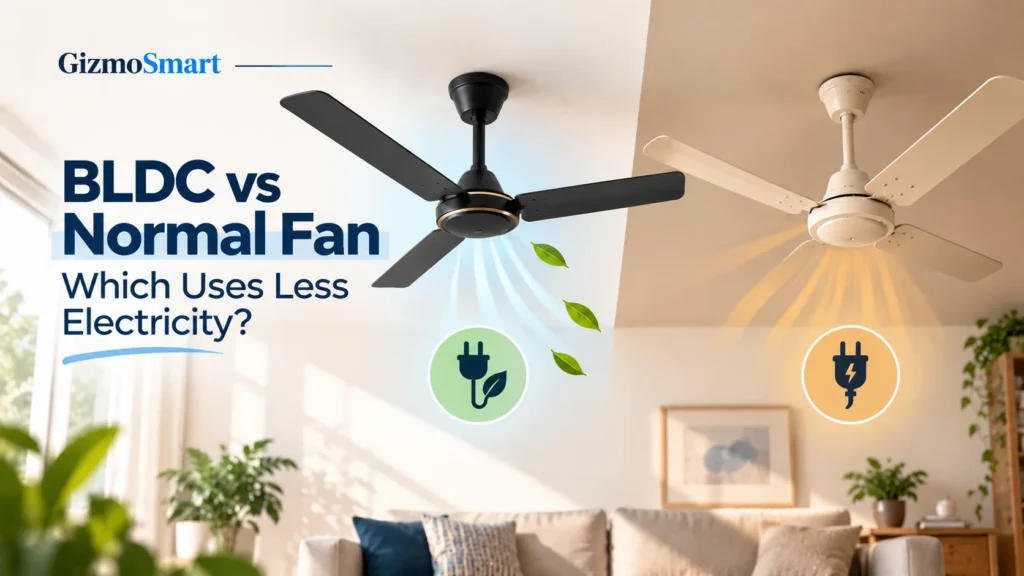
When summer arrives, ceiling fans run almost non-stop. They keep us cool, but they also run up our power bills. If you are shopping for a new fan, you have likely seen a lot of buzz about BLDC models. But when comparing a BLDC ceiling fan vs normal ceiling fan, what exactly makes them different, and does a BLDC fan actually save you money?
This guide will break down the differences between a BLDC motor and a normal fan motor. We will look at how they work, crunch the numbers on real electricity savings, and give you a helpful ceiling fan buying guide to choose the best option for your home.
1. What is a BLDC Ceiling Fan?
To understand the savings, we first need to look at how these motors work.
- Normal Fan Motors: They commonly use AC induction motors, which generate rotation through electromagnetic induction. They consume more power in many cases and lose some energy as heat during operation.
- BLDC Fan Motors: BLDC stands for Brushless Direct Current. These fans use permanent magnets and an electronic controller to operate the motor efficiently. They generally consume less electricity than conventional fans with comparable airflow, although actual consumption varies by model.
Think of it like a bicycle. A normal fan is like riding a bike with the brakes gently rubbing against the wheel. You have to pedal much harder to move. A BLDC fan is like a brand-new bike that glides effortlessly down the street.

2. BLDC Ceiling Fan vs Normal Ceiling Fan: Key Differences
Let us look at how these two types of fans stack up across different categories:
| Feature | Normal Induction Fan | BLDC Ceiling Fan |
| Power Consumption | High (70W to 80W) | Low (28W to 35W) |
| Heat Generation | High | Almost None |
| Noise Level | Medium (Humming sound) | Super Quiet |
| Speed Control | Needs heavy wall regulators | Uses a smart remote |
| Starting Cost | Low (Budget-friendly) | Higher initial price |
3. How Much Money Do You Actually Save?
Let us do some simple math to see the real-world savings. Imagine you run one fan for 12 hours a day for a whole year. Let us assume your electricity company charges you ₹7 per unit of power.
1. The Normal Fan Math
- Wattage: 75 Watts
- Power used in a year: 328.5 units of electricity
- Total yearly cost: ₹2,299.50
2. The BLDC Fan Math
- Wattage: 30 Watts
- Power used in a year: 131.4 units of electricity
- Total yearly cost: ₹919.80
The Grand Total Savings
By switching just one normal fan to a BLDC ceiling fan, you save about ₹1,380 every single year.
If you have 4 fans in your house, that adds up to over ₹5,500 in total savings per year! Since a BLDC fan usually costs around ₹1,500 more than a normal fan, your new fan pays for itself in just over one year. After that, the money saved stays right in your pocket.
These figures are estimates based on the assumed wattage, daily usage and electricity rate. Actual savings depend on the models compared, operating speed, hours of use and your electricity tariff.
4. Beyond Savings: Extra Benefits of BLDC Fans
Saving money on your electricity bill is great, but BLDC fans come with other fantastic perks that make life easier:
- Inverter Friendly: Because they use so little power, BLDC fans run up to three times longer on your home backup inverter when the power goes out.
- Smart Remotes: You do not need to get up to change the speed. Most BLDC fans come with a remote control that lets you set timers, change speeds, and turn on a “sleep mode.”
- No Humming Noise: Normal fans often make a loud clicking or humming noise at low speeds. BLDC fans are whisper-quiet, making them perfect for bedrooms.
- Stable Speed: Even if the voltage in your house drops or fluctuates, a BLDC fan will keep spinning at the exact same speed.
5. Quick Ceiling Fan Buying Guide
Are you ready to purchase a new fan? Use this quick ceiling fan buying guide to make sure you get the perfect fit for your room:
Check the Blade Span (Size)
- For small rooms or bathrooms (up to 70 sq ft): choose a 900 mm fan.
- For standard bedrooms (up to 130 sq ft): choose a 1200 mm fan.
- For large living rooms (over 150 sq ft): choose a 1400 mm fan.
- Look at the Star Rating: Compare the BEE star rating and rated power consumption of fans with similar sweep sizes. Also check air delivery to ensure the fan provides sufficient airflow for your room.
- Check the Air Delivery (CMM): CMM stands for Cubic Meters per Minute. It tells you how much air the fan moves. Look for a CMM of 220 or higher for strong, breezy airflow.
- Warranty Matters: Because BLDC fans have electronic circuits inside, make sure to buy from a trusted brand that offers at least a 2-year to 5-year warranty on the motor.

6. Frequently Asked Questions
Do BLDC fans work with old-style regulators?
No. BLDC fans need their own electronic remote or a compatible dimmer switch to control speed. A traditional wall regulator built for induction motors will not work correctly and can damage the motor.
How long does a BLDC fan motor typically last?
With no friction-based wear on the motor, BLDC fans are generally built to last as long as, or longer than, traditional induction fans, provided you buy from a brand offering a genuine multi-year warranty on the motor.
Is a BLDC fan worth it for a room I barely use?
Not really. The savings come from hours of daily use. For a spare room or storage space that runs only occasionally, the extra upfront cost may take much longer to pay back.
Can a BLDC fan run on solar power or a small inverter?
Yes, this is one of their biggest advantages. Because they draw so little power, BLDC fans are well suited to solar setups and smaller home inverters, running significantly longer than a normal fan on the same backup power.
Conclusion
While a normal ceiling fan is cheaper to buy on day one, it drains more money from your wallet every month through high electricity bills. Ultimately, choosing between a BLDC ceiling fan vs normal ceiling fan depends on your daily usage, electricity costs, budget, and how long you plan to use the fan.