Aero O2: Can an Air-Purifying Ceiling Fan Actually Improve Indoor Air Quality?
 Blogs
Blogs
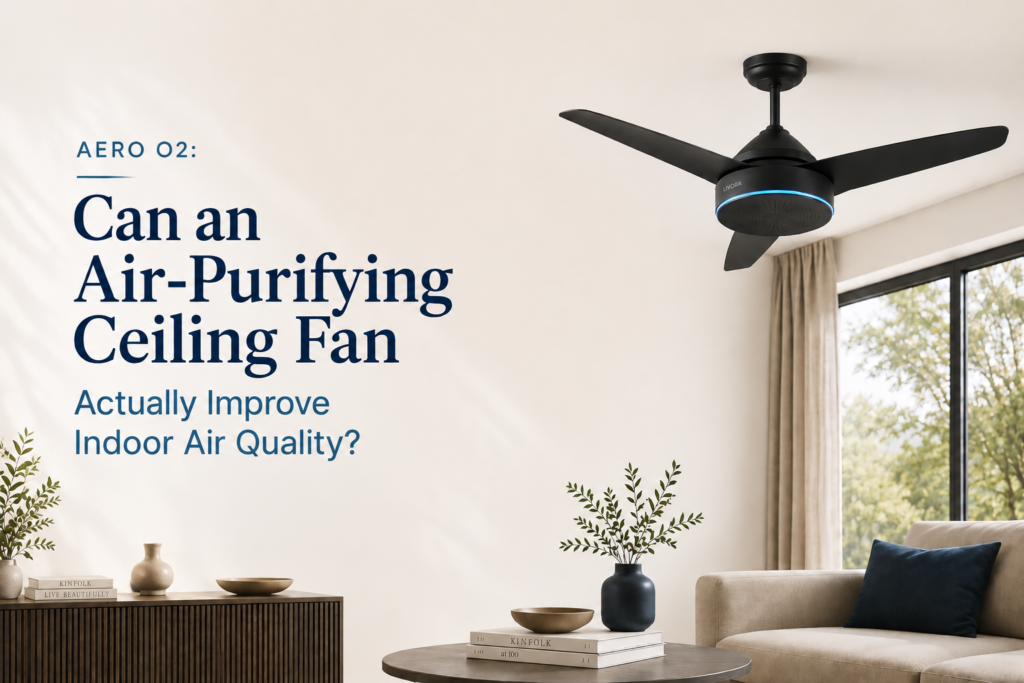
Indoor air quality has quietly become a serious concern for Indian households, especially in cities where dust, pollen and pollution routinely slip inside through windows and doors. As awareness grows, an air purifier fan may seem like a practical way to improve indoor air quality while keeping your home cool. It is no longer a small luxury but a growing necessity, and appliance makers have responded with hybrid products like the Aero O2, a ceiling fan that claims to purify the air it circulates.
But can a ceiling fan really double as an air purifier, or is this simply a clever marketing mashup of two unrelated appliances? Here is how an air-purifying ceiling fan like the Aero O2 actually works, and what it can realistically do for your indoor air quality.
1. How Does an Air-Purifying Ceiling Fan Work
An air-purifying ceiling fan like the Aero O2 integrates a filtration unit, typically housed near the motor casing, into the body of a standard ceiling fan. As the fan blades rotate and circulate air throughout the room, a portion of that air is drawn through the built-in filter, which traps dust particles, pollen and other airborne debris before the air is pushed back out into the room.
This is fundamentally different from a dedicated standalone air purifier, which actively pulls in room air through a sealed intake and pushes it through multiple filtration stages, often including HEPA and activated carbon layers, in a continuous, contained loop.

2. What an Air-Purifying Fan Does Well
- Continuous passive filtration: since the fan is likely already running for cooling purposes, it filters air throughout the day without requiring a separate appliance to be switched on and monitored.
- Dust reduction in circulating air: it can meaningfully reduce the amount of visible dust and larger particles recirculating through the room over time.
- Space saving: it combines two functions, cooling and basic filtration, into a single ceiling-mounted appliance, which is useful in bedrooms where counter or floor space for a separate purifier is limited.
An air-purifying ceiling fan like the Aero O2 is a genuinely useful layer of passive filtration. It is a helpful supplement to clean indoor air, not a full replacement for a dedicated purifier.
3. Where It Falls Short of a Dedicated Air Purifier
A ceiling-mounted filtration system processes only a fraction of the air passing through its blades, compared to a dedicated purifier that continuously draws and filters the entire room’s air volume through a sealed, high-efficiency path. For households dealing with serious allergy triggers, fine particulate pollution, or smoke, a dedicated standalone purifier with true HEPA filtration remains meaningfully more effective at improving overall indoor air quality.
4. Who Should Consider an Air-Purifying Ceiling Fan
An air-purifying ceiling fan works best as a supplementary layer of protection rather than a full replacement for dedicated purification, particularly for households in moderately dusty environments who want passive, always-on filtration without adding another appliance to a room. For anyone dealing with severe pollution exposure, respiratory conditions, or a strong need for measurable air quality improvement, pairing this fan with a dedicated purifier gives noticeably better results than relying on the fan alone.

5. Frequently Asked Questions
Q: Does the Aero O2 ceiling fan actually purify air?
Yes, it filters a portion of the air it circulates through a built-in filtration unit, reducing dust and larger particles, though it does not match the filtration volume of a dedicated standalone purifier.
Q: Can an air-purifying ceiling fan replace a standalone air purifier?
For most households dealing with serious air quality concerns, no. It works best as a supplementary layer alongside a dedicated purifier rather than a full replacement.
Q: How is an air-purifying ceiling fan different from a regular air purifier?
A regular air purifier draws and filters the entire room’s air continuously through a sealed, multi-stage filtration path, while a ceiling fan filters only a portion of the air passing through its blades.
Q: Is an air-purifying ceiling fan worth it for a dusty city apartment?
It can meaningfully reduce recirculating dust and pollen as a passive, always-on layer, making it a reasonable addition, especially where space for a separate purifier is limited.
Q: Should I get an air-purifying fan or a dedicated air purifier for allergies?
For serious allergy triggers or fine particulate pollution, a dedicated HEPA air purifier remains more effective, with an air-purifying fan serving best as a complementary addition.
6. Conclusion
An air-purifying ceiling fan like the Aero O2 offers genuine, if modest, filtration benefits as part of a room’s everyday airflow, making it a smart supplementary choice rather than a full purification solution on its own.