Does Installing a Smart Lock Need Your Housing Society’s Approval?
 Blogs
Blogs
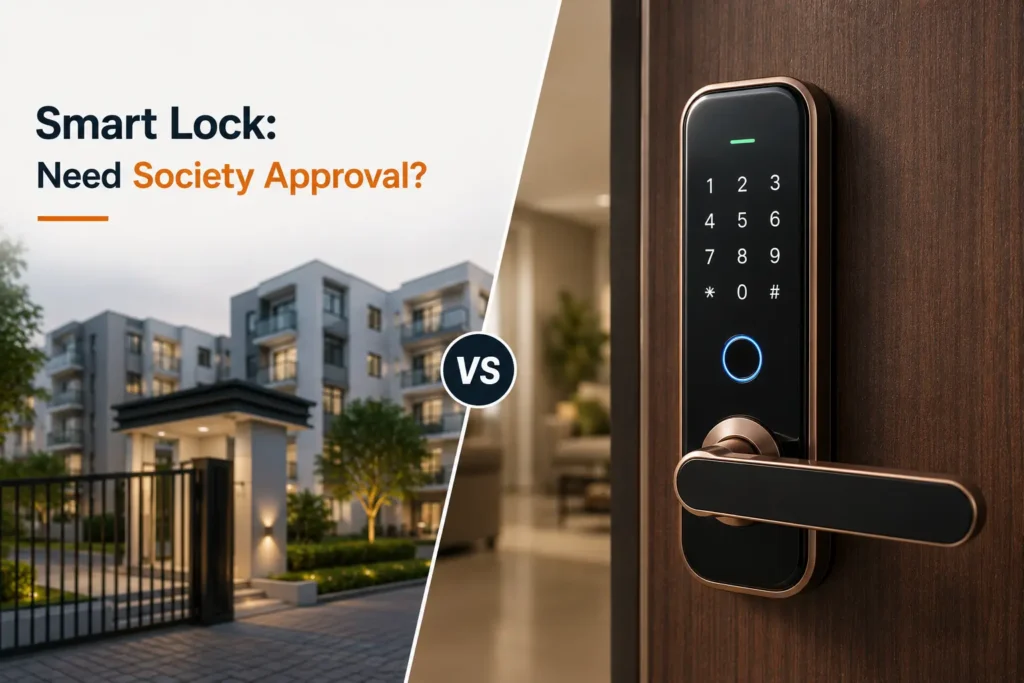
Smart lock installation is becoming increasingly popular in Indian apartments for the convenience and security they offer. But before installing one, a practical question comes up for most residents: do you actually need approval from your housing society first?
The answer depends on your society’s rules, safety concerns, and how shared property is governed in your building. Here is what typically applies, and how to approach the installation the right way.
1. Understanding Housing Society Rules
Your apartment door itself is private property, but the corridor and main entrance around it are considered common property. Many societies have by-laws requiring approval for changes that affect safety or the building’s aesthetics, which means installing a smart lock may need at least intimation to the society, if not formal approval.
2. Security Concerns
Housing societies generally want uniformity and safety across all residents. A smart lock that gets hacked or malfunctions could raise broader concerns about building security, which is why some societies ask residents to use certified brands or installation by approved vendors.
You may not need a formal yes from your society to install a smart lock. You almost always need to tell them you are doing it, and that single step avoids most disputes later.
3. Insurance and Liability
Some home insurance policies require locks to meet certain standards to remain valid. Societies may also insist that any lock does not compromise fire safety or emergency access. Getting approval, even informal, helps ensure your setup stays compliant with both insurance and safety norms.
4. Practical Scenarios by Living Situation
- Individual apartments: usually free to install a smart lock, but should still inform the society as a courtesy and safeguard.
- Rented apartments: tenants typically need both landlord and society approval before installation.
- Gated communities: often have stricter rules, since uniformity in door design tends to be more strictly enforced.
5. The 2026 Housing Society Reality
Most urban societies allow smart locks but require written intimation before installation. Some premium societies mandate approved brands to maintain consistency across the building. The broader trend is encouraging, with many societies now actively welcoming smart locks as part of wider smart home upgrades.
6. Frequently Asked Questions
Q: Do I need housing society approval to install a smart lock?
Formal approval is not always required, but informing the society is wise, since corridors and entrances are common property and many societies have by-laws covering safety-related changes.
Q: Can a housing society reject a smart lock installation?
Some societies, particularly gated communities and premium complexes, may require certified brands or approved vendors, which can effectively restrict certain installations.
Q: Do tenants need extra approval to install a smart lock?
Yes. Tenants in rented apartments typically need both landlord and society approval before installing a smart lock.
Q: Does installing a smart lock affect home insurance?
It can. Some insurance policies require locks to meet certain standards, so checking your policy and society rules helps keep coverage valid.
Q: Are housing societies becoming more open to smart locks?
Yes, the general trend is toward encouragement, with many societies now treating smart locks as a normal part of smart home upgrades rather than a concern.
7. Conclusion
Installing a smart lock usually does not require formal approval, but informing your housing society is a smart move. It avoids disputes, keeps you compliant with safety rules, and helps keep your insurance valid. The best approach is to check your society’s by-laws, inform them in writing, and choose a certified smart lock brand for peace of mind.
Compare certified smart lock brands and models on Livora before you install one.