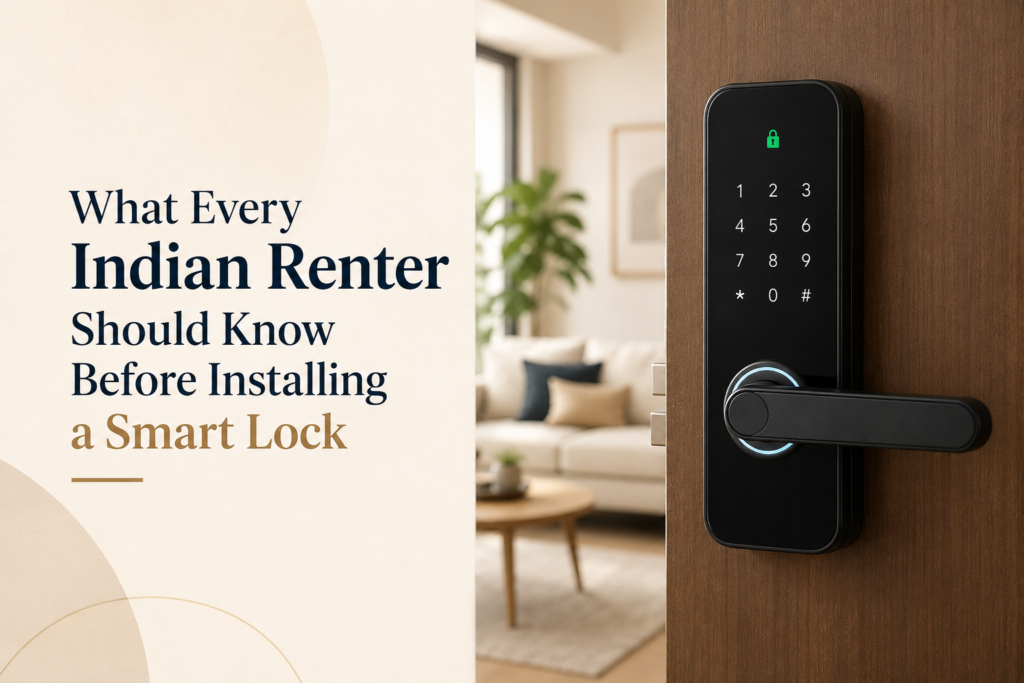
What Every Indian Renter Should Know Before Installing a Smart Lock
 Blogs
Blogs
Smart locks have moved from a novelty to a genuinely practical upgrade for Indian homes, including rented ones. But installing one in a property you do not own comes with a few extra questions: what your lease allows, how your data is handled, and whether the installation itself is reversible.
This guide walks through everything a renter in India should check before installing a smart lock, so you get the convenience and security without any surprises
1. Understanding Smart Locks
Smart locks represent a significant step up from traditional locks, offering a range of technologies designed to improve convenience, safety, and access control.
Key Technologies
- Biometric locks: Use facial recognition or fingerprint scanning for high-security access
- Keypad locks: Allow entry through a numeric code, offering flexibility and ease of use
- Bluetooth or Wi-Fi connected locks: Enable remote access and control through a smartphone app for added convenience
Advantages
- Convenience: No more digging for physical keys or worrying about lockouts
- Enhanced security: Advanced encryption and tamper detection make forced entry noticeably harder
- Access management: Detailed control over who can enter, at what times, and under what conditions
2. Legal and Landlord Agreements
Installing a smart lock can involve legal considerations, especially in rental situations where property modifications affect the landlord-tenant relationship.
Assessing Lease Agreements
- Review lease terms: Check your rental agreement for clauses related to property modifications, so you know upfront whether installing a smart lock is permitted
- Tenant rights: In India, tenants generally have the right to modify the premises, provided they do not cause damage or infringe on the landlord’s interests
Consulting Landlords
- Mutual agreement: Get written consent from your landlord to stay compliant with legal and rental obligations
- Legal framework: Familiarize yourself with local rental laws so your installation stays within legal bounds
3. Privacy Concerns
Smart locks collect various types of data, and it is worth understanding how that information is handled before you install one.
Data Protection
- Encryption: Make sure the lock uses strong encryption to protect sensitive data, such as biometric information
- Data storage: Be aware of where and how your data is stored. Smart locks may store data locally on the device or in the cloud, and local storage is generally better for privacy
- Vendor policies: Review the manufacturer’s privacy policy to understand their data handling practices, including retention and sharing
A smart lock is only as trustworthy as the data policy behind it. Reading the fine print once is far easier than dealing with a privacy concern after the fact.
4. Power and Connectivity
Smart locks need a power source and, in most cases, a stable internet connection for full functionality.
Power Backup
- Battery life: Choose a lock with long-lasting battery life and an easy battery replacement process for uninterrupted operation
- Backup power: Look for locks with a manual override or an alternative power source, so a power outage does not lock you out
Connectivity
- Internet dependency: Check how reliable your home internet connection is, since unstable connections can affect remote access features
- Wi-Fi vs Bluetooth: Wi-Fi offers broader remote access options, while Bluetooth tends to be simpler and faster for local use
5. Installation and Compatibility
Proper installation is essential for both the lock’s security and its day-to-day functionality
- Skills required: Some smart locks need professional installation to be securely fitted and to operate correctly
- Compatibility check: Confirm the smart lock is compatible with your existing door hardware before you buy, to avoid installation issues later
6. Cost and ROI
It is worth thinking through the financial side of purchasing and installing a smart lock before committing.
Initial Cost
- Price range: Smart locks can range from a few thousand to several tens of thousands of rupees, depending on features and brand
- Budgeting: Check whether the investment fits your budget and matches the value you expect from it
Return on Investment
- Security benefits: Enhanced security alone can justify the cost by offering genuine peace of mind
- Resale or transfer value: A smart lock can add to a property’s appeal, which is worth keeping in mind even as a tenant improving a space you plan to leave eventually
7. Maintenance and Support
Regular maintenance and dependable support matter for how long a smart lock stays reliable.
Maintenance
- Regular checks: Inspect battery levels and mechanical parts periodically to keep performance consistent
- Software updates: Keep the lock’s firmware updated to benefit from security patches and new features
Support
- Vendor support: Make sure the manufacturer offers reliable customer support, including help with installation and troubleshooting
- Warranty: Understand the warranty terms, including what is covered for defects and service
8. Frequently Asked Question
Q: Can a tenant install a smart lock in a rented home in India?
In most cases, yes, provided the lease does not explicitly prohibit modifications and the installation does not damage the property. It is best to get written consent from the landlord before proceeding.
Q: Will installing a smart lock damage my rental property’s door?
It depends on the type of lock. Many smart locks are designed to fit over or replace existing hardware without permanent changes, but it is worth checking installation requirements and confirming reversibility with your landlord beforehand.
Q: Is my data safe with a smart door lock?
Data safety depends on the manufacturer’s encryption standards and storage policies. Locks that store data locally rather than in the cloud generally offer stronger privacy, so it is worth checking the vendor’s privacy policy before buying.
Q: What happens to a smart lock during a power cut?
Most smart locks run on batteries rather than mains power, so a power cut on its own does not affect the lock. However, it is still worth choosing a model with a manual key override or backup power option as a safeguard.
Q: Do I need Wi-Fi for a smart lock to work?
Not always. Bluetooth-based smart locks work locally without needing an internet connection, while Wi-Fi-enabled locks require a stable connection for remote access and app-based control.
9. Conclusion
Installing a smart lock can meaningfully improve the security and convenience of a rental property, but it works best with a bit of upfront planning. By checking your lease, getting landlord consent, reviewing data privacy policies, and confirming installation compatibility, you can enjoy a smart lock’s benefits without running into legal or technical surprises later