Petrol Commuter Bike vs Electric Scooter: What’s Actually Cheaper to Run in 2026?
 Blogs
Blogs
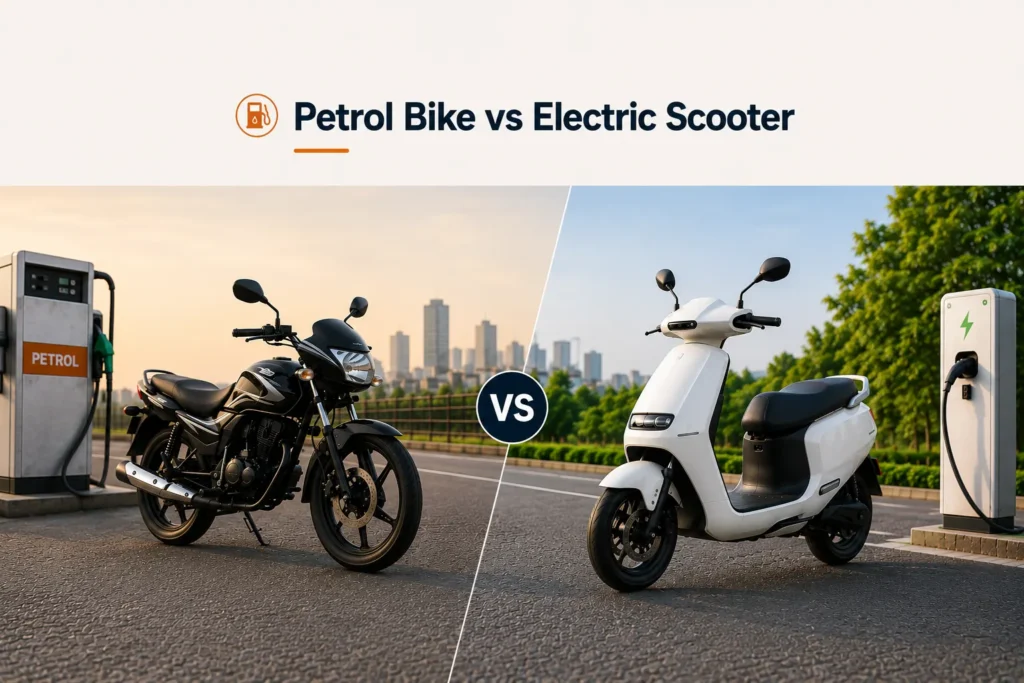
The EV revolution has firmly reached Indian roads, and the big question for daily commuters is simple: electric scooter vs petrol bike, which option is actually cheaper to run? Showroom prices grab most of the attention, but the real story lies in the running cost per kilometre.
Here is how the numbers actually break down in 2026, from purchase price to fuel and maintenance costs.
1. Purchase Price vs Running Cost
Petrol commuter bikes are generally cheaper upfront, with entry-level models starting around 70,000 to 90,000 rupees. Electric scooters carry a higher initial cost, often 1,00,000 to 1,40,000 rupees, though subsidies and incentives help narrow that gap. The upfront difference matters far less once you calculate what each vehicle actually costs to run day to day.
2. Electric Scooter vs Petrol Bike Running Costs
When comparing an electric scooter vs petrol bike, the biggest difference comes from fuel and electricity costs.Petrol bikes average around 45 to 55 kilometres per litre, and at 100 rupees per litre, that works out to about 1.8 to 2.2 rupees per kilometre. Electric scooters average around 35 to 40 kilometres per unit of electricity, and at 8 rupees per unit, that comes to roughly 0.20 to 0.25 rupees per kilometre. When you compare the electric scooter vs petrol scooter running cost, EV scooters can be nearly 8 to 10 times cheaper per kilometre to run.
An electric scooter can cost nearly ten times less per kilometre to run than a petrol bike. Even after factoring in a battery replacement every few years, that gap rarely closes.
3. Maintenance, Insurance, and Spares
Petrol bikes require regular oil changes, filter replacements, and engine servicing, with annual service costs around 3,000 to 5,000 rupees. Electric scooters have far fewer moving parts and no oil changes, keeping annual service costs closer to 1,000 to 2,000 rupees, giving EVs a real edge on maintenance.
On insurance and spares, petrol bikes come out ahead, since premiums tend to be lower and spare parts remain widely available and affordable. Electric scooters carry slightly higher insurance due to battery cost, and spares can be pricier or harder to source, though these savings are smaller than the gap in fuel cost.
4. The Battery Replacement Factor
EV scooter batteries typically need replacement after 5 to 7 years, costing 25,000 to 40,000 rupees, a cost petrol bikes simply do not have. This is genuinely the biggest hidden cost of EV ownership, but spread out over several years, it still does not outweigh the daily fuel savings.
5. The 2026 Cost Reality Check
For a daily commuter riding 30 kilometres a day, a petrol bike costs roughly 60 rupees a day, or about 21,900 rupees a year. An electric scooter costs around 7 rupees a day, or about 2,555 rupees a year. Over five years, that gap adds up to nearly 95,000 to 1,00,000 rupees saved on fuel alone with an EV scooter.
6. Frequently Asked Questions
Q: Is an electric scooter actually cheaper to run than a petrol bike?
Yes, significantly. Electric scooters cost roughly 0.20 to 0.25 rupees per kilometre to run compared to 1.8 to 2.2 rupees per kilometre for petrol bikes, nearly 8 to 10 times cheaper.
Q: Electric scooter battery replacement cost?
Battery replacement after 5 to 7 years typically costs 25,000 to 40,000 rupees, which is the biggest hidden cost of EV ownership.
Q: Do electric scooters save money on maintenance too?
Yes. With fewer moving parts and no oil changes, EV scooters average 1,000 to 2,000 rupees in annual service costs compared to 3,000 to 5,000 rupees for petrol bikes.
Q: Are petrol bikes cheaper on insurance and spares?
Yes, petrol bikes generally have lower insurance premiums and more widely available, affordable spare parts compared to electric scooters.
Q: How much can you save over 5 years switching to an electric scooter?
For a daily commuter riding 30 km a day, the fuel savings alone can add up to nearly 95,000 to 1,00,000 rupees over five years.
7. Conclusion
In 2026, the math is fairly clear: electric scooters are dramatically cheaper to run than petrol commuter bikes. Upfront cost and battery replacement remain real factors, but the savings in fuel and maintenance make EVs the smarter choice for most urban riders. Those who ride long distances or live in areas with limited charging infrastructure may still find petrol bikes more practical, but for everyday commuting, the electric scooter wins on running cost.
Compare petrol commuter bikes and electric scooters by running cost on Livora before you decide.