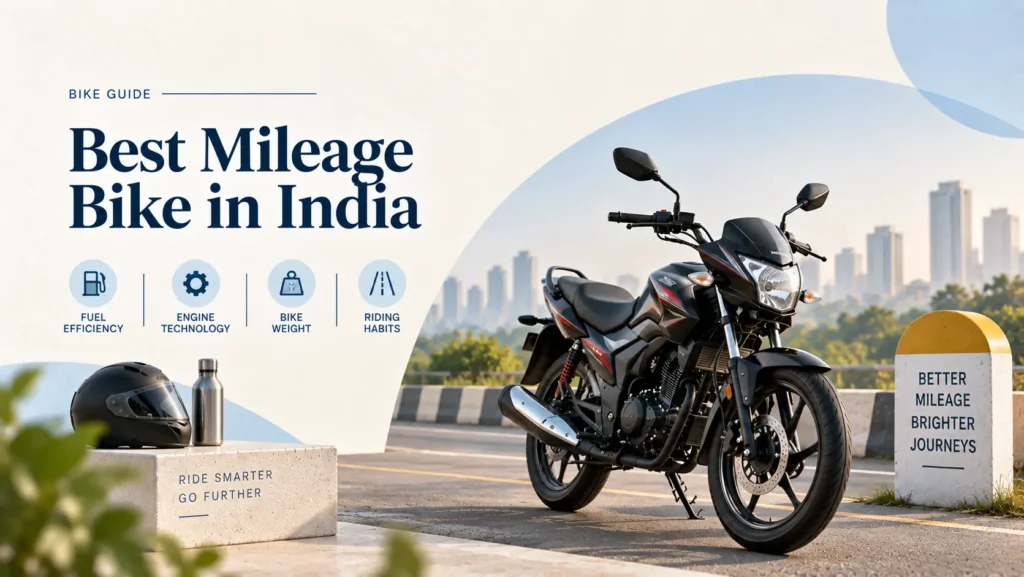
Best Mileage Bike in India: What Really Affects Fuel Efficiency
 Blogs
Blogs
If you’ve been bike shopping in India lately, you’ve probably noticed that mileage is one of the first numbers everyone throws around, usually before price, sometimes even before looks. That’s not surprising. With fuel prices where they are and most people covering 30 to 40 km a day just commuting, a few kilometres per litre genuinely add up to real money by the end of the month.
But here’s the thing nobody tells you at the showroom. The mileage figure on the brochure is a lab number, measured under conditions your daily commute will never actually match. What you get depends just as much on how you ride, how well you maintain the bike, and whether you’re stuck in traffic or cruising on a highway. So before we get into which bikes actually deliver, it’s worth understanding what’s really driving that number in the first place. That’s exactly what this guide covers, along with the current best mileage bike in India worth considering.
1. What Actually Affects Bike Mileage
The brochure gives you one number, but five real factors decide what you actually get on the road.
Engine Size and Tuning
Smaller, well-tuned engines generally deliver better mileage than larger ones, since they need less fuel to produce the power required for everyday riding.
Riding Style
Aggressive acceleration and frequent hard braking reduce mileage noticeably. Smooth, steady riding almost always returns better fuel efficiency than an aggressive one.
Vehicle Weight
Lighter bikes typically consume less fuel, since the engine does not have to work as hard to move the same distance.
Maintenance
Regular servicing, clean air filters, and correct tyre pressure all directly affect how efficiently a bike burns fuel.
Road and Traffic Conditions
Stop-and-go city traffic reduces mileage compared to steady highway riding, regardless of how efficient the engine itself is.
2. Best Mileage Bikes for Everyday Riding
Now that you know what’s actually driving the number, here’s the best mileage bike in India right now, based on real ownership experience, not lab estimates.
| Bike | Real-World Mileage | Why It Makes the List |
|---|---|---|
| Hero Splendor Plus | 55–62 km/l city, up to 68 km/l highway | India’s widest service network — you’ll find a mechanic who knows this bike inside out almost anywhere you ride |
| Hero HF Deluxe | 55–63 km/l city | Gets you nearly Splendor-level mileage at a noticeably lower price |
| Bajaj Platina 110 | 60–65 km/l city, up to 68 km/l highway | The only one here with a disc brake — worth it if safety matters as much as savings to you |
| TVS Sport | 58–65 km/l city, up to 68 km/l highway | Comes with a built-in econometer, so you can actually see and adjust your riding in real time |
| Honda Shine 100 | 58–63 km/l city, up to 65 km/l highway | Fuel injection means its mileage holds up better across different conditions than carburetted rivals |
Here’s a number worth sitting with: at ₹104/litre and a 35 km daily commute, a bike like the Platina 100 costs you somewhere around ₹1,600-1,820 a month in fuel. Stretch that across a year, and the gap between the most and least efficient bike on this list can run into a few thousand rupees — easily enough to make mileage a genuine factor in your decision, not just a talking point.
The mileage number on a brochure is a lab result. The mileage you actually get depends on how you ride, how well the bike is maintained, and the traffic you ride through every day.
3. How to Choose a Bike With Better Mileage
Once you know what to look for, narrowing down your options gets a lot easier. Here’s what actually matters when you’re standing in a showroom trying to decide between two bikes that look almost identical on paper.
- Compare real-world mileage figures, not just brochure claims.
- Consider fuel-injected engines over carburetted ones where possible.
- Choose a lighter bike if fuel efficiency is your top priority.
- Maintain your bike regularly to keep mileage consistent over time.
- Match the engine size to your actual usage rather than choosing extra power you rarely need.

4. Frequently Asked Questions
Q: What engine size gives the best mileage in bikes?
Bikes in the 100 to 125cc range typically deliver the best mileage, since these engines are tuned for fuel efficiency rather than outright performance.
Q: Does riding style really affect a bike’s mileage?
Yes, significantly. Aggressive acceleration and frequent hard braking reduce mileage, while smooth and steady riding improves fuel efficiency.
Q: Do fuel-injected bikes get better mileage than carburetted ones?
Generally yes, since fuel injection provides more precise fuel delivery than a traditional carburettor, which usually improves efficiency.
Q: Does regular maintenance improve bike mileage?
Yes. Regular servicing, clean air filters, and correct tyre pressure all directly affect how efficiently a bike burns fuel.
Q: Is a lighter bike always more fuel-efficient?
Lighter bikes typically consume less fuel since the engine does not have to work as hard, though tuning and riding conditions still matter.
5. Conclusion
Mileage depends on far more than the number printed on a brochure. Engine size, tuning, riding style, weight, maintenance, and road conditions all combine to determine your real-world fuel efficiency.