What Is Cruise Control in a Bike? How It Works, Benefits and Limitations
 Blogs
Blogs
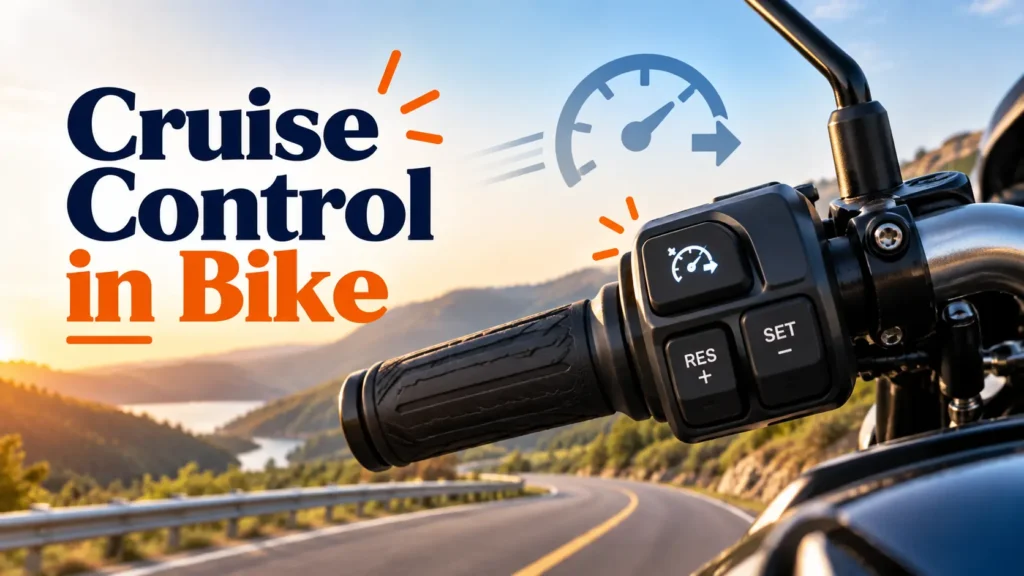
Long highway rides can get tiring, especially when you have to keep the throttle steady for hours. Cruise control in a bike can make these rides more comfortable by helping the motorcycle maintain a set speed without requiring you to hold the throttle continuously.
But what is cruise control in a bike, how does it work, and is it worth paying extra for? Let’s look at how it works, where it helps, and what you should know before choosing a motorcycle with this feature.
1. What Is Cruise Control in a Bike?
Cruise control in a bike is a feature that helps a motorcycle maintain a selected speed without requiring the rider to keep adjusting the throttle. It can be especially useful on long highway rides, where maintaining the same throttle position for an extended period can become uncomfortable. However, not every product sold as bike cruise control works in the same way. The two main types to understand are electronic cruise control and throttle-lock accessories.
Electronic Cruise Control
Electronic cruise control helps maintain the selected speed by automatically managing the motorcycle’s throttle. The way it operates, including its activation speed and cancellation controls, depends on the motorcycle. Check your bike’s owner’s manual to understand how its system works and when it can be used.
Throttle-Lock Accessories
A throttle lock is an accessory that holds the throttle at a particular position. It can reduce the effort needed to keep the throttle in place, but it generally does not actively adjust the throttle to maintain a selected speed.
For example, when riding uphill or downhill, a basic throttle lock will not regulate speed in the same way as electronic cruise control.
The key difference: Electronic cruise control manages the throttle to help maintain a set speed, while a basic throttle lock holds the throttle position. They are not the same thing.
2. How Does Cruise Control Work on a Bike?
On a motorcycle equipped with electronic cruise control, the process is usually straightforward:
- Ride at a speed that allows cruise control to be activated.
- Switch on the system using the designated control.
- Let the system help maintain the selected speed while you continue watching the road.
- Cancel the system using the controls described in the owner’s manual whenever necessary.
The exact process varies between motorcycles. Some systems cancel when the rider applies the brakes or operates the clutch, while others have additional conditions.
A throttle lock works differently because it holds the throttle position rather than actively regulating speed. The rider must continue adjusting the throttle as road conditions change. Understanding which type of system your motorcycle uses is important before relying on it during a ride.
3. What Are the Benefits of Cruise Control on Bikes?
Less Hand and Wrist Fatigue
Holding the throttle in one position for a long time can make your hand and wrist uncomfortable. Electronic cruise control reduces the need for continuous throttle input, which may make long highway rides more comfortable. The difference depends on your riding position, road conditions, and how long you ride.
A More Consistent Speed
On open roads, cruise control helps maintain the selected speed without constant manual adjustments. This can be useful when traffic is light and road conditions allow you to travel at a steady pace.
More Comfort on Long Trips
If you regularly travel between cities or enjoy motorcycle touring, cruise control on a motorcycle can make long stretches of riding less tiring by reducing one repetitive task.
You still need to watch for traffic, bends, road conditions, and changing speed limits. Cruise control does not take over responsibility for safe riding.
Limited Benefits in City Traffic
Cruise control is less useful in busy cities, where you often need to brake, accelerate, and adjust your speed. If you mainly use your motorcycle for short daily commutes, paying extra for this feature may not be worthwhile.
4. When Should You Avoid Using Cruise Control?
Cruise control is useful only when road and traffic conditions are suitable. It should not be used in every riding situation.
Avoid using it in conditions such as:
- Heavy or stop-and-go traffic.
- Wet, slippery, or unpredictable road conditions.
- Sharp bends or winding roads that require frequent speed adjustments.
- Poor visibility or situations where traffic conditions change quickly.
- Any situation in which the motorcycle manufacturer advises against its use.
Do not assume the system will automatically respond to every road hazard. Its capabilities depend on the motorcycle and the technology it uses.
Always stay alert, maintain control of the bike, and follow the manufacturer’s safety instructions.

5. Is Cruise Control Worth It on a Bike?
Whether cruise control is worth paying extra for depends on how you use your motorcycle.
It May Be Worth It If You:
- Regularly take long highway rides.
- Travel between cities on your motorcycle.
- Enjoy touring and spend extended periods riding at a steady speed.
- Want to reduce the effort involved in continuously holding the throttle.
It May Not Be Essential If You:
- Mostly ride in congested city traffic.
- Use your motorcycle for short daily commutes.
- Rarely travel on open highways.
- Would have to pay significantly more for a feature you would seldom use.
Before buying a motorcycle, check whether cruise control is included in the exact variant you are considering. If you are looking at an aftermarket cruise control kit for a bike, check its compatibility and confirm whether it is electronic cruise control or simply a throttle lock.
Ultimately, the feature is most valuable when it suits your regular riding habits. There is little reason to pay extra for it if you rarely ride on highways.
6. Frequently Asked Questions
Q. What Is Cruise Control in a Bike?
Cruise control in a bike is a feature that helps a motorcycle maintain a selected speed without requiring the rider to continuously adjust the throttle. How it works depends on the system fitted to the motorcycle.
Q. What Is the Use of Cruise Control in a Bike?
It helps make long rides more comfortable by reducing the need for constant throttle input. It is generally more useful on open highways than in busy city traffic.
Q. How Does Cruise Control Work on a Motorcycle?
Electronic cruise control manages the throttle to help maintain a selected speed. A basic throttle lock holds the throttle position but does not actively regulate speed in the same way.
Q. Does Cruise Control Reduce Rider Fatigue?
It may reduce hand and wrist fatigue during long highway rides because you do not have to continuously hold the throttle in the same position. The actual benefit depends on riding conditions and individual comfort.
Q. Can Cruise Control Be Added to Any Bike?
No. Compatibility depends on the motorcycle and the specific system or accessory. Check the manufacturer’s documentation before buying or installing aftermarket equipment.
7. Conclusion
Cruise control in a bike can make long highway rides more comfortable by helping maintain a steady speed and reducing continuous throttle input.
If you regularly go on long-distance trips, it may be worth paying extra for. If most of your riding involves short city commutes, you may not need it.
Before buying a motorcycle or an aftermarket accessory, check how the system works, whether it is compatible with your bike, and what safety instructions apply.