Best Smart Locks for Main Doors in India: 5 Options Compared (2026)
 Blogs
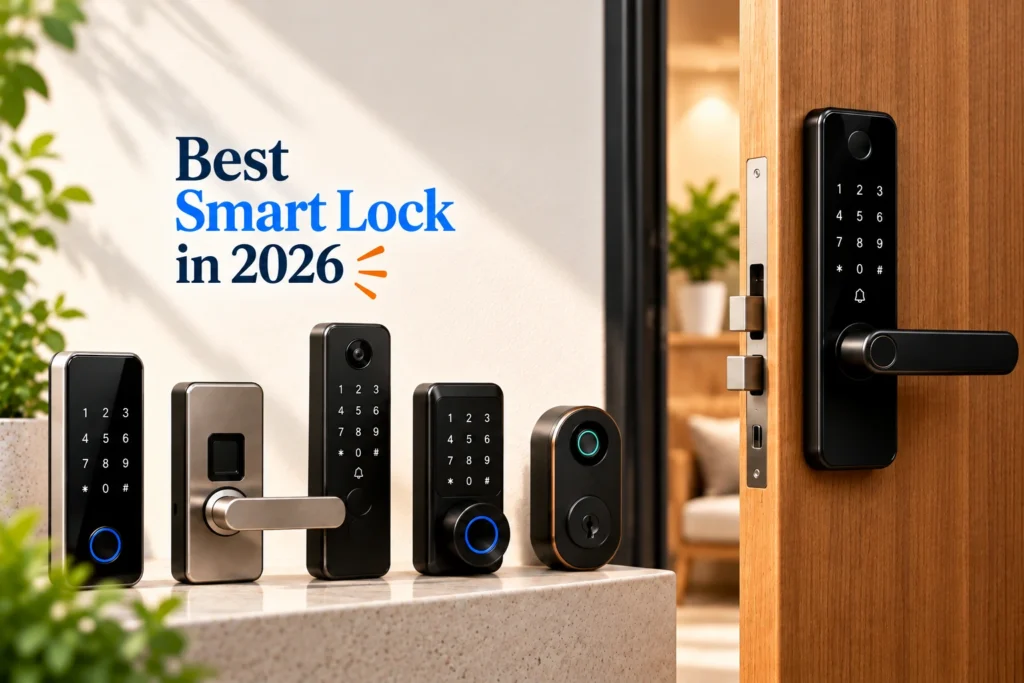
Looking for the best smart lock for main door use in your home? A smart door lock can make everyday entry easier by letting you unlock your door using a fingerprint, PIN, access card or mobile app, depending on the model. Some options also support temporary visitor codes and remote access. However, choosing the right lock involves more than comparing features. Your door type, installation requirements, battery backup and budget all matter.
To help you make an informed decision, we have compared five smart locks available in India from Qubo, Atomberg, Yale, Godrej and Native. This guide covers their listed prices, key features, access methods and compatibility considerations so you can find a smart lock that suits your home.
Prices in this article were checked against online listings on 30 October 2026. They may change with offers, colour variants and availability. Product specifications are based on manufacturer information, not independent hands-on testing.
1. Best Smart Locks for Main Doors in India: Quick Comparison
| Smart Lock | Listed Price | Main Access Methods | Best For |
|---|---|---|---|
| Qubo Smart Door Lock Essential | ₹8,990 | Fingerprint, PIN, OTP, access card and app-related features | Buyers looking for multiple access options at a lower price |
| Atomberg Azhero | ₹10,499 | Fingerprint, PIN, NFC card, app, remote OTP and physical key | Households that want flexible access methods |
| Yale YDME100NxT | ₹11,987 | Fingerprint, PIN, RFID card and mechanical key | Buyers who prefer straightforward digital access |
| Godrej Neo Connect | ₹10,999–₹11,299 | Fingerprint, PIN, RFID card, app and mechanical key | Buyers interested in Wi-Fi connectivity |
| Native Lock Pro | ₹15,499 | Fingerprint, passcode, visitor code, app, key card, physical key and Doorbell Connect | Buyers who want additional visitor-management features |
Important: Qubo’s official product page displayed ₹8,990 but also showed an availability notification. Confirm stock before including it as an immediately available recommendation.
For a more detailed checklist before purchasing, read our guide on what to check before buying a smart door lock.
1. Qubo Smart Door Lock Essential: An Affordable Smart Lock for Home
Listed price: ₹8,990
If you want to upgrade from a conventional lock without moving into a higher price bracket, the Qubo Smart Door Lock Essential is worth considering. It combines several access methods with app-based features, giving household members alternatives to carrying a physical key.
Key features
- Fingerprint recognition
- PIN-code and OTP access
- Access card support
- Bluetooth connectivity
- App-based access management
- Passage mode and privacy lock
- Low-battery alert and emergency power support
- Advertised battery life of more than 12 months
- Two-year warranty
Qubo specifies support for up to 100 fingerprints and 100 access cards. Its product page also lists remote unlocking through a compatible Qubo Video Doorbell Pro or Wi-Fi gateway.
What to consider
The Essential is designed for compatible wooden doors measuring 30–55 mm thick. It is not suitable for metal, glass or sliding doors according to the manufacturer’s specifications.
Remote access also requires compatible additional hardware, so check the total cost if you want to unlock the door while away from home.
Our take: Consider the Qubo Essential if you want multiple access options at a relatively low price. However, confirm availability and any additional hardware requirements before purchasing.
2. Atomberg Azhero: A Smart Door Lock With Multiple Unlocking Options
Listed price: ₹10,499
The Atomberg Azhero is a practical option for households where different people prefer different ways to unlock the main door. It supports fingerprint recognition, PIN access, NFC cards, app-based access, remote OTPs and a mechanical key.
Key features
- Six listed unlocking methods
- Fingerprint and PIN access
- NFC access card
- Atomberg Home app
- Remote OTP access
- Mechanical key backup
- Two stainless-steel bolts
- Emergency USB-C power port
- Two-year warranty
Atomberg specifies compatibility with doors 28–65 mm thick. The lock also includes protection against repeated incorrect PIN attempts and keypad snoop protection.
What to consider
The Azhero supports remote OTP access, but you should confirm how the feature works in your intended setup. A temporary OTP and the ability to unlock a door directly through an app are different functions.
Check the door dimensions and installation requirements before ordering. Free installation is listed for selected PIN codes.
Our take: The Atomberg Azhero is worth comparing if you want several ways to unlock your door without moving into the premium price range.
3. Yale YDME100NxT: A Digital Lock for Everyday Use
Listed price: ₹11,987
Not everyone needs Wi-Fi or remote access. Some households simply want the convenience of fingerprint entry, a PIN and an access card, while retaining a physical key as a backup.
The Yale YDME100NxT offers this combination, making it an option for buyers who prefer a relatively straightforward digital locking system.
Key features
- Fingerprint recognition
- PIN-code access
- RFID card access
- Mechanical key override
- Support for up to 100 fingerprints
- Low-battery warning
- Emergency power supply
- Three-year warranty
Yale specifies compatibility with doors 40–65 mm thick. The product also provides a warning and temporarily disables authentication after repeated incorrect access attempts.
What to consider
The published specifications do not list built-in Wi-Fi or app-based remote unlocking for this model. If connected features are important to you, compare the exact model rather than assuming every Yale smart lock offers them.
Also, check the installation charges for your location. Yale’s product page lists installation and demo pricing, so confirm what is included in your order.
Our take: The YDME100NxT is worth considering if you want fingerprint, PIN and card access with a mechanical backup, without needing extensive connected features.
4. Godrej Neo Connect: A Smart Lock With Wi-Fi Connectivity
Listed price: ₹10,999 for black and ₹11,299 for rose gold
The Godrej Neo Connect is designed for buyers who want conventional access methods alongside app-connected functionality.
In addition to fingerprint, PIN and RFID access, the product listing includes Wi-Fi connectivity and mobile app features. These can be useful when you want to manage access without relying exclusively on a physical key.
Key features
- Fingerprint recognition
- PIN-code access
- RFID card access
- Mobile app control
- Wi-Fi connectivity
- Mechanical key backup
- Three deadbolts
- Three-year warranty listed by the manufacturer
- Free installation advertised on the product listing
What to consider
Check which remote-access functions are included with the model and whether any additional configuration is required. Wi-Fi connectivity alone does not guarantee compatibility with every smart-home platform.
Godrej lists this model for wooden doors. Have the installer check the door thickness, existing lock arrangement and available installation space before fitting it.
Our take: The Neo Connect is worth comparing if you want a smart lock for your main door that combines multiple access methods with Wi-Fi-based features.
5. Native Lock Pro: A Smart Lock With Visitor-Management Features
Listed price: ₹15,499
The Native Lock Pro is designed for households that want more than keyless entry. Along with fingerprint and passcode access, it offers app-based controls, time-limited visitor codes and a Doorbell Connect feature.
This can be useful if you regularly receive visitors and want more control over how access is managed.
Key features
- Seven listed unlocking methods
- Fingerprint and passcode access
- Visitor codes and key cards
- Urban Company app control
- Doorbell Connect
- Unlock history and intruder alerts
- Triple-deadbolt mechanism
- Anti-peep passcode
- Emergency USB-C power
- Approximately six months of advertised battery life
- Three-year unconditional warranty listed by the manufacturer
- Free installation
The Doorbell Connect feature is designed to send a photo request when your existing doorbell rings. Check the manufacturer’s compatibility information before assuming it will work with a smart doorbell.
What to consider
The Native Lock Pro is intended for wooden doors 30–60 mm thick. The manufacturer also specifies a gap of more than 80 mm between the main door and safety door.
It is not compatible with double doors, metal doors, glass doors or sliding doors according to its published specifications.
Battery life varies with usage, and the additional visitor-management features may not be necessary for every household.
Our take: Consider the Native Lock Pro if you want app-based visitor access and doorbell-related features, and your door meets its installation requirements.
2. How to Choose the Best Smart Lock for Your Main Door
The right smart lock depends on how you use your door every day. Before making a purchase, compare these factors rather than choosing a model based only on price or the number of features advertised.
1. Check Your Door Compatibility First
Before searching for the best smart lock for main door use, measure your door thickness and identify its material. Check whether the lock is compatible with your existing door and mortise arrangement.
Some models are designed specifically for wooden doors and cannot be installed on metal, glass or sliding doors. If your home has a safety door, check the required gap between the two doors as well.
A quick compatibility check can save you from ordering a lock that cannot be installed properly.
2. Compare Fingerprint, PIN and App Access
Different unlocking methods serve different needs.
Fingerprint access is convenient for everyday entry. PIN access can be useful for family members who do not want to carry an access card, while temporary visitor codes can help when someone needs access for a limited period.
App-based access is useful when you need remote control, but check whether the lock has built-in Wi-Fi or requires a separate gateway.
Choose the access methods you will actually use rather than paying extra for features that do not suit your routine.
3. Check Battery Life and Emergency Access
Smart locks generally operate using batteries, but the expected battery life varies by model and usage.
Check the manufacturer’s battery-life estimate, the low-battery warning system and the emergency power procedure. If a physical key is supplied, keep the backup key in a secure and accessible place.
Also, remember that a battery-powered lock may continue to operate during a household power cut, while internet-dependent features may not work if the network is unavailable.
4. Compare Installation and Warranty
The advertised product price is not always the final cost. Installation, additional hardware and service availability can affect what you pay.
Before ordering, confirm:
- Whether installation is included at your address
- Whether your door needs any modification
- What the warranty covers
- How to contact authorised service support
- Whether additional accessories are required for remote access
These details are especially important when comparing models with similar prices.
5. Look Beyond the Number of Security Features
A lock with more unlocking methods is not automatically more secure.
Look for practical features such as protection against repeated incorrect PIN attempts, anti-peep PIN entry, access management and a mechanical backup where available. If the lock connects to an app, use a strong password and remove access credentials when they are no longer needed.
The door frame, installation quality and your access-management habits also play an important role in home security.
3. Frequently Asked Questions
Which is the best smart lock for main door use in India?
There is no single best model for every household. The Qubo Essential and Atomberg Azhero offer several access methods at relatively affordable listed prices. The Yale YDME100NxT focuses on straightforward digital access, the Godrej Neo Connect adds Wi-Fi-based features, and the Native Lock Pro offers additional visitor-management functionality.
Start with door compatibility, installation requirements and the features you need before comparing prices.
What is the price of a smart lock for a main door in India?
The five models in this guide have listed prices ranging from ₹8,990 to ₹15,499. The final price may vary with stock, colour, offers, installation and additional accessories.
Check the manufacturer’s current listing before purchasing, particularly if a model is showing an availability notification.
Are smart locks suitable for Indian homes?
Smart locks can be suitable for Indian homes when they are compatible with the door and installed correctly. Check the door material, thickness, safety-door clearance and availability of local installation support.
Do smart locks work during a power cut?
Many smart locks use batteries and can continue operating during a household power cut. However, remote access and other internet-dependent functions may be unavailable if the network or associated equipment loses power. Check the emergency power and manual override instructions for your specific model.
Is fingerprint access better than a PIN?
Both can be useful. Fingerprint access offers convenient entry, while PIN access does not depend on fingerprint recognition. Having more than one access method can provide a useful alternative if your preferred method is unavailable.
4. Final Verdict
Choosing the best smart lock for main door use is about finding the right balance between convenience, compatibility, security features and cost.
The Qubo Smart Door Lock Essential is worth considering for multiple access options at a lower listed price, subject to availability. The Atomberg Azhero offers flexible unlocking methods, while the Yale YDME100NxT is a straightforward option for fingerprint, PIN and card access.
If Wi-Fi-based functionality is important, compare the Godrej Neo Connect. For households that want visitor codes and doorbell-related features, the Native Lock Pro is another option to consider.
Still deciding which smart lock is right for your home? See the Atomberg smart lock’s features and access options up close, and get expert guidance through a live video demo.
Want to understand how different smart locks work before buying? Explore GizmoSmart’s product guides and available live-demonstration options to compare features and make a more informed decision.