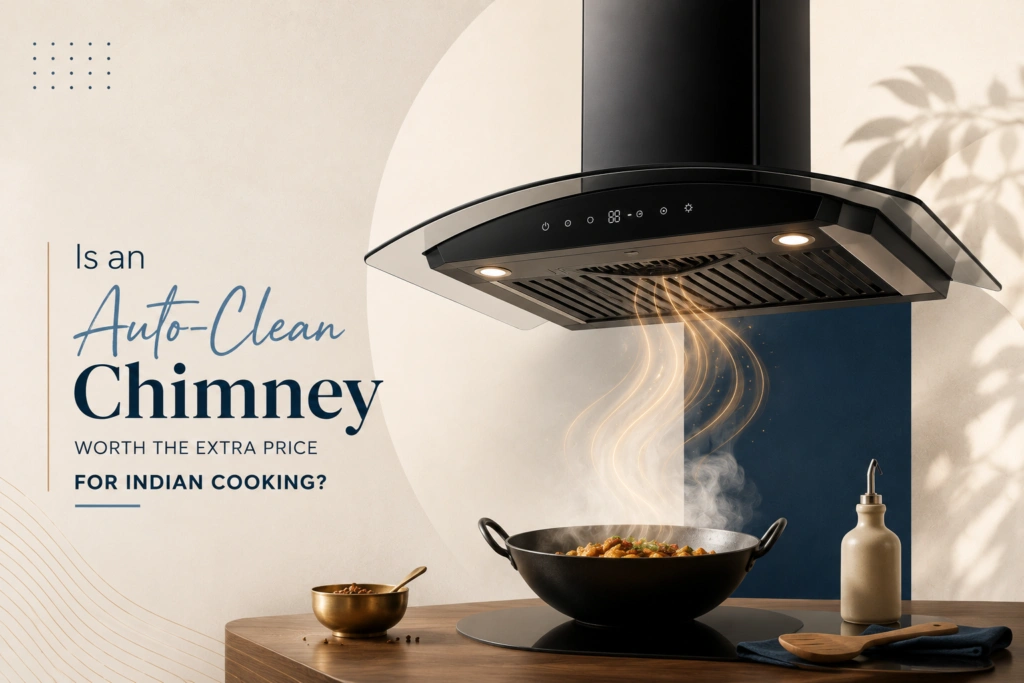
Is an Auto-Clean Chimney Worth the Extra Price for Indian Cooking?
 Blogs
Blogs
Indian cuisine is celebrated worldwide for its rich flavours, aromatic spices and slow-cooked delicacies, but making these dishes involves heavy deep frying, roasting and the famous tadka, releasing large amounts of airborne grease, oil vapour and thick smoke into the air.
Without a reliable ventilation system, this grease quickly settles onto kitchen tiles, ceilings and wooden cabinets as a stubborn, sticky yellow layer. Buying a chimney is no longer a luxury but a necessity, and the biggest dilemma many home cooks face is whether an auto clean chimney is worth paying more for, or whether a traditional manual-clean model is enough.. Here is a detailed breakdown of whether paying the premium kitchen chimney price in India for auto-clean technology is truly worth it.
1. The Unique Challenge of Indian Cooking
Traditional manual chimneys rely heavily on mesh or baffle filters. As greasy air is sucked into the hood, the baffle filters force the smoke to change direction rapidly, chopping the air so heavy oil droplets separate and stick to the metal curves of the filter. These filters are highly effective, but they saturate quickly.
Within two to three weeks of heavy Indian cooking, oil layers cake over the filter gaps completely. Regular filter cleaning is therefore important for maintaining suction and preventing grease buildup.
These clogged filters can:
- Strangles the chimney’s suction power.
- Forces the motor to run hotter and louder which can eventually contribute to unusual chimney noises.
- Requires manually removing heavy, sticky plates and scrubbing them with harsh chemicals or hot caustic soda every fortnight.
This exhausting maintenance cycle is exactly why auto-clean chimney models were introduced to the Indian market.

2. How Does an Auto Clean Chimney Actually Work?
An auto-clean chimney features a specialised internal design focused on hassle-free maintenance. Instead of forcing you to scrub components by hand, the appliance handles degreasing at the touch of a button.
- The heating element: an internal heating pad wrapped around the motor housing and blower assembly.
- Melting the grease: activating auto-clean mode shuts off suction and heats the interior for roughly 10 to 15 minutes, melting hardened oil, sludge and grime stuck to the fan blades and motor walls.
- The oil collector: liquefied oil runs down the interior walls and drains into a removable oil collector tray at the bottom of the machine.
- The final step: slide out the tray once or twice a month, empty the waste oil, wash the tray with dish soap, and slide it back in.
3. The Next Evolution: Filterless Chimney vs Auto-Clean Baffle Chimney
As you research kitchen chimney price in India, you will frequently encounter the term filterless chimney. It is worth understanding how these two modern options compare.
- Auto-clean with baffle filters: heavy metal baffle plates trap most of the oil at the entrance, while the internal auto-heat function cleans the inner motor area. It offers excellent grease extraction but still needs occasional cleaning of the outer plates.
- Filterless chimney: this design eliminates front filters entirely. The motor is repositioned and suction is increased to pull smoke and oil directly inside the machine, so there are no front grates to block, giving consistent airflow while the auto-clean heating system handles all the grease processing.
An auto-clean chimney does not just save you a fortnightly scrubbing chore. It keeps the motor running clean, which is often what decides how long the appliance actually lasts.
4. Price Comparison: Is the Premium Justified
A basic, manual-clean mesh or baffle chimney typically starts around ₹5,000 to ₹8,000. A reliable, high-suction auto-clean or filterless chimney from reputed brands like Faber, Hindware, Elica or Glen generally ranges from ₹11,000 to ₹25,000, and kitchen chimney auto clean price varies with suction capacity and motion-sensor features.
While the upfront cost is higher, the investment pays off through several long-term benefits:
- Massive time savings, eliminating the messy chore of scrubbing sticky filters every two weeks.
- Consistent suction performance, since internal parts stay free of heavy oil buildup, keeping the chimney at its peak rated suction.
- Longer motor lifespan, since a clean motor experiences far less friction and structural strain, reducing the chances of premature motor burnout.
5. The Verdict: Should You Buy One
If your daily cooking involves frequent deep frying, mustard oil, parathas or heavy gravies, an auto-clean or filterless chimney is genuinely worth the extra price. The convenience of a clean, odour-free kitchen without manual scrubbing makes it a worthwhile upgrade for most modern Indian homes.
If your household mostly does light, oil-free cooking, baking or boiling, a standard manual baffle chimney can save you money upfront while still meeting your basic ventilation needs.

6. Frequently Asked Questions
Q: Is an auto-clean chimney worth the extra cost for Indian kitchens?
For households that cook with a lot of oil, deep frying or heavy tadka, yes. The time saved on manual cleaning and the longer motor life generally justify the higher price.
Q: How does auto-clean chimney technology work?
An internal heating element melts hardened grease inside the motor housing, and the liquefied oil drains into a removable collector tray that you empty periodically.
Q: What is the price difference between manual and auto-clean chimneys?
Manual baffle or mesh chimneys typically start around ₹5,000 to ₹8,000, while auto-clean or filterless models from reputed brands range from about ₹11,000 to ₹25,000.
Q: Is a filterless chimney better than an auto-clean baffle chimney?
Filterless chimneys avoid front filters entirely and offer more consistent airflow, while auto-clean baffle chimneys still trap oil at the entrance but need occasional plate cleaning. Both are strong upgrades over manual models.
Q: How often should I run the auto-clean cycle?
Roughly once every two weeks for typical Indian cooking, so grease does not have time to harden inside the motor assembly.
7. Conclusion
For most Indian kitchens that see regular deep frying and heavy tadka, an auto-clean or filterless chimney earns back its higher price through time saved, consistent suction, and a longer-lasting motor. Lighter cooking households can reasonably stick with a manual model.