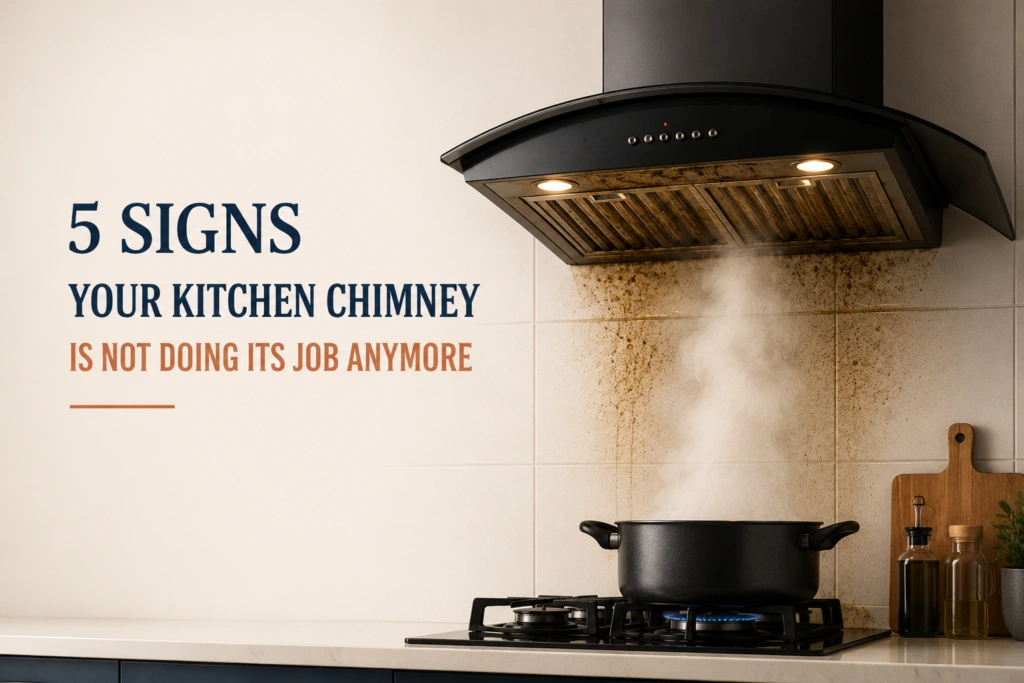
5 Signs Your Kitchen Chimney Is Not Doing Its Job Anymore
 Blogs
Blogs
A kitchen chimney is the unsung hero of the modern Indian home. It quietly pulls away heavy oil fumes, pungent spice aromas, and thick smoke to keep your cooking space fresh. But when suction drops, unusual noises appear, or grease starts building up around the kitchen, these kitchen chimney signs can indicate that something is wrong. However, like any hard-working appliance, it will eventually lose its efficiency. Over time, grease accumulates, motors wear down, and electrical parts degrade. If your kitchen chimney is not doing its job anymore, your walls will turn sticky, and your indoor air quality will drop.
Investing in a good chimney for your kitchen is only half the battle. Maintaining its efficiency is what truly matters. If your kitchen feels increasingly stuffy during meal prep, it is worth looking closer. Recognizing the early red flags of a failing unit can save you from expensive repairs and prevent long-term damage to your modular cabinets. Here are five clear signs your kitchen chimney is not working properly, and what to do about each one.
1. Kitchen Chimney Signs: Lingering Fumes and Slow Smoke Clearing Lingering Fumes and Slow Smoke Clearing
The most obvious indicator of a chimney problem is when it fails at its primary task: ventilation. If your kitchen chimney is not removing smoke effectively during deep-frying or tadka preparation, the unit is struggling. You might notice coughing across the house or a visible haze hanging in the air long after the stove is turned off.
When you notice weak suction like this, the culprit is usually a severe blockage. In a typical kitchen, heavy oil particles coat the mesh or baffle filters. Regular chimney filter cleaning can help prevent this buildup and maintain proper airflow.

2. Drastic Drop in Chimney Suction
A simple way to check whether your kitchen chimney is working properly is to test its suction. A fully functional unit should easily hold a lightweight piece of paper against its filters when running on high speed. If the paper instantly falls flat, you are dealing with a serious suction issue.
When chimney suction drops drastically, it means the airflow cycle is broken. This could be due to a clogged filter, but it can also stem from an issue further up the line, such as a bird’s nest or accumulated debris inside the external duct pipe blocking the exhaust path. When the air has nowhere to go, suction at the hood drops to near zero.
3. Unusual Loud Noises and Grinding Sounds
While no appliance runs completely silent, a healthy motor produces a consistent, predictable hum. If your appliance suddenly starts making loud rattling, vibrating, or grinding noises, it is a clear sign that your chimney is not working at its optimal capacity.
Rattling sounds usually point to loose internal components, such as a misaligned fan blower or loose mounting brackets. Grinding or screeching noises indicate that the motor bearings have dried out or are choked with grease. If your chimney is making unusual sounds, understanding the common causes of chimney noise can help you identify the problem.
4. Oily Cabinets and Grease Dripping
The primary goal of a chimney is to keep your surroundings clean. If you notice a thick, sticky film of oil on your overhead cabinets, or worse, black oil dripping from the hood back onto your stovetop, your system is overwhelmed.
This happens when the internal oil collector tray is full or the filters have reached their absolute saturation point. Instead of trapping grease, the appliance begins to repel it. This sticky residue is not just unsightly, it attracts dust, damages wooden cabinetry, and creates a breeding ground for bacteria.
5. Unresponsive Controls or Electric Shocks
Modern appliances feature touch panels or motion sensors. If the control panel stops responding, fails to change speeds, or skips the auto-clean cycle, the internal electronic board may be failing. Even more critical is if you experience a mild static shock when touching the metallic body of the hood.
Electrical glitches occur when moisture and vapour bypass the seals and enter the circuitry. A malfunctioning control panel or a tripping circuit breaker means the appliance has become a safety hazard. If you experience any electrical faults, cut the power supply immediately.
A chimney rarely fails all at once. It usually tells you first, through weaker suction, an odd noise, or a sticky cabinet, long before the motor actually gives up.

6. How to Know If Your Chimney Needs Service vs Replacement
Knowing whether your chimney needs service or replacement can save you from premature costs. Most suction issues, minor noises, and grease problems can be resolved with a professional deep cleaning or a basic filter replacement.
However, if your appliance is over 8 to 10 years old, regularly trips your main circuit breaker, or needs a complete motor replacement, it might be wiser to upgrade. Modern models offer better energy efficiency, lower noise levels, and improved smart features.
7. Frequently Asked Questions
Q: What are the most common signs a kitchen chimney is failing?
The most common signs are lingering smoke and fumes, a noticeable drop in suction, unusual rattling or grinding noises, oily residue on cabinets, and unresponsive controls or mild electric shocks from the unit.
Q: How can I test my kitchen chimney’s suction at home?
Hold a lightweight piece of paper against the filter while the chimney runs on high speed. A healthy unit should hold the paper in place. If it falls immediately, the suction has dropped significantly and needs attention.
Q: Why is my kitchen chimney making a grinding noise?
Grinding or screeching noises usually mean the motor bearings have dried out or become clogged with grease. This should be checked soon, since continued use can lead to complete motor failure.
Q: Should I clean my chimney myself or call a technician?
Routine filter cleaning can be done at home, but persistent suction problems, electrical faults, or motor noises are best handled by a certified technician to avoid further damage or safety risks.
Q: When should I replace my kitchen chimney instead of repairing it?
If the appliance is more than 8 to 10 years old, frequently trips the circuit breaker, or needs a full motor replacement, it is usually more practical to upgrade to a newer, more efficient model.
8. Conclusion
Never ignore the warning signs of a malfunctioning kitchen chimney. Keeping your kitchen clean, safe, and odour-free depends on a reliable exhaust system. If your unit is showing any of these five signs, act quickly, and consult a certified technician to restore your indoor air quality before small issues turn into expensive ones.