Baffle Filter vs Mesh Filter: Which Kitchen Chimney Filter Actually Suits Indian Cooking?
 Blogs
Blogs
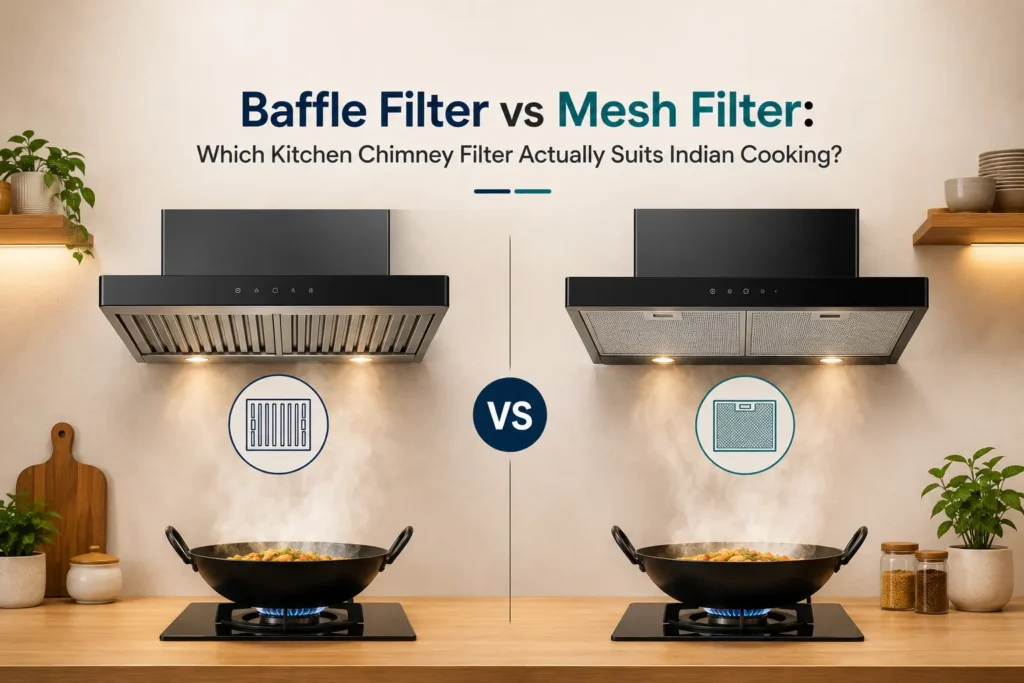
Indian kitchens are unique, with heavy use of oil, spices, and tadka that fill the air with smoke, grease, and strong aromas. A kitchen chimney is essential for handling this, but the choice of filter makes a real difference to how well it actually performs. Should you go for a baffle filter or a mesh filter?
Here is how each filter type works, and which one genuinely suits the realities of Indian cooking rather than just looking good on a spec sheet.
1. How Does a Mesh Chimney Filter Work?
Mesh filters use multiple layers of fine aluminium mesh to trap grease particles as air passes through. They are lightweight, inexpensive, and easy to install or replace, which makes them an appealing budget option.
Their main drawback is that grease clogs the mesh quickly, reducing suction power over time. Most mesh filters need cleaning every one to two weeks, and they tend to be less effective during heavy frying or oily cooking sessions.

2. How Does a Baffle Chimney Filter Work?
Baffle filters use stainless steel panels with angled curves that force air to change direction, physically separating grease from the smoke as it passes through. This design is highly effective for Indian cooking styles like deep frying, tadka, and curries, and the grease collects in the panel without blocking airflow, so baffle filters typically only need cleaning once every two to three months.
The trade-off is that baffle filters are slightly heavier and costlier than mesh filters, and they occasionally benefit from professional cleaning to maintain best performance.
A mesh filter is cheaper to buy. A baffle filter is cheaper to live with, since it goes months between cleanings instead of weeks.
3. Filterless Chimneys: The New Option
Filterless chimneys use powerful suction and auto-clean features instead of a physical filter. They eliminate filter cleaning entirely and maintain consistent suction power over time, but they come with a higher upfront cost and depend heavily on the reliability of their auto-clean technology.
4. Maintenance and Cost Comparison
- Mesh filter: frequent cleaning and lower initial cost, but efficiency reduces over time as the mesh wears.
- Baffle filter: less frequent cleaning, higher durability, and better long-term performance for oil-heavy cooking.
- Filterless: minimal ongoing maintenance, but a higher purchase price upfront.

5. The 2026 Kitchen Reality Check
Given how much heavy frying and masala-rich cooking happens in most Indian kitchens, baffle filters remain the most practical choice for the majority of households. Filterless chimneys are gaining popularity in urban kitchens for their convenience, while mesh filters still work fine in budget kitchens as long as owners stay disciplined about cleaning them regularly.
6. Frequently Asked Questions
Q: Which chimney filter is better for Indian cooking
Baffle filters are generally better suited to Indian cooking, since they handle heavy frying and tadka more effectively and need cleaning only every two to three months.
Q: How often do mesh filters need cleaning?
Mesh filters typically need cleaning every one to two weeks, since grease clogs the fine mesh relatively quickly.
Q: Are filterless chimneys worth the extra cost?
For buyers who value convenience and want to avoid filter maintenance entirely, yes, though they come with a higher upfront price and rely on their auto-clean technology working reliably.
Q: Why do baffle filters need less frequent cleaning than mesh filters?
Baffle filters use angled steel panels that let grease collect without blocking airflow, so suction stays strong far longer than with a mesh design.
Q: Is a mesh filter chimney a bad choice for a budget kitchen?
Not necessarily. Mesh filters work fine on a budget as long as you commit to cleaning them every one to two weeks to maintain suction power.
7. Conclusion
For most Indian kitchens, baffle filters are the clear winner, balancing efficiency, durability, and ease of maintenance. Mesh filters are cheaper but demand frequent cleaning, while filterless chimneys are a premium option for those who value convenience above all else.
Baffle, mesh, or filterless which one would actually make the most sense for your kitchen? Explore the features with a product expert, ask your questions, and see the options up close before making your choice.