Disc Brake vs Drum Brake: Which One Do You Actually Need on a Daily Commuter?
 Blogs
Blogs
When buying a commuter bike, the disc brake vs drum brake decision is one of the most overlooked choices. Brochures often list the braking system almost as an afterthought, but that choice genuinely matters for your daily ride.
Here is how the two systems actually work, their real pros and cons, and which option makes the most sense for Indian commuting conditions.
1. How Drum Brakes Work
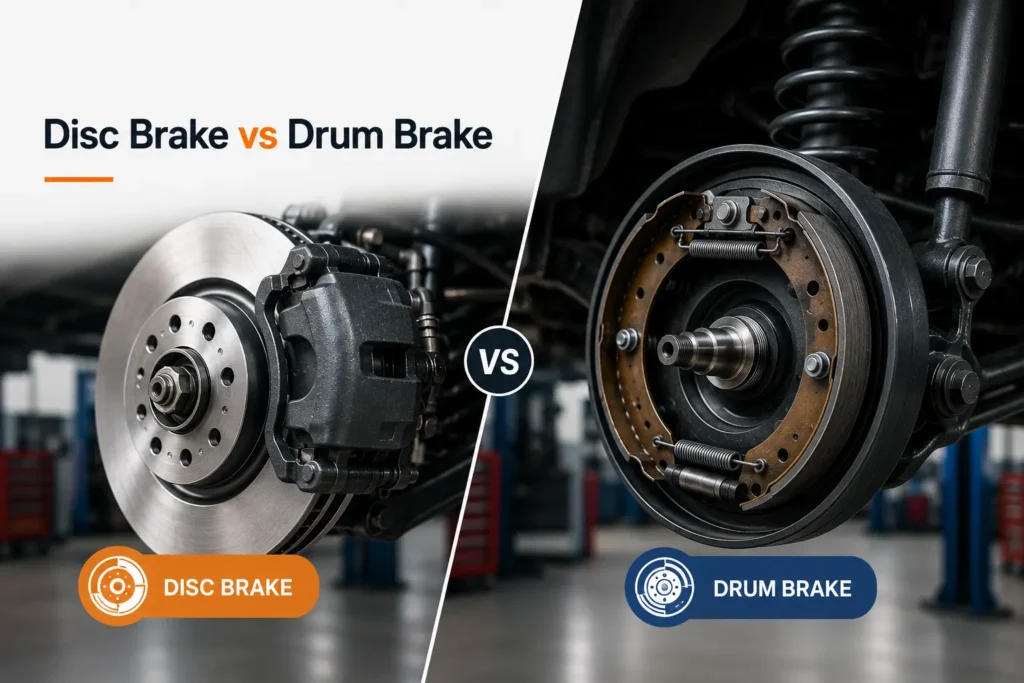
A drum brake uses a set of brake shoes that press outward against the inside of a rotating drum attached to the wheel. The design is simple and easy to maintain, costs less than disc brakes, and delivers adequate stopping power at moderate speeds.
Its limitations show up over time. Heat build-up reduces braking efficiency during long or repeated braking, performance drops in wet conditions, and response is generally slower compared to a disc setup.
2. How Disc Brakes Work
A disc brake uses a caliper that squeezes brake pads against a metal disc, or rotor, attached to the wheel. This delivers stronger and more consistent braking power, performs noticeably better in rain and mud, and cools faster with less brake fade over long rides.
The trade-offs are a higher upfront cost, slightly more expensive maintenance, and a brake feel that can feel too sharp for inexperienced riders at first.
Choosing between disc and drum brakes is not really about which technology sounds more advanced. It is about matching your braking system to the speeds and weather you actually ride in.
3. Disc Brake vs Drum Brake: Braking Distance and Safety
When comparing disc brake vs drum brake, disc brakes generally shorten braking distance, especially at higher speeds, and provide more confidence and control during emergency stops. A test ride is a useful way to assess braking feel and control before buying.
4. Daily Commuter Considerations
- City riding: drum brakes are often enough for short trips, low speeds, and budget-conscious riders.
- Highway riding: disc brakes are safer for higher speeds and longer rides.
- Weather factor: in monsoon-prone regions, disc brakes outperform drums significantly.
- Maintenance: drum brakes are cheaper to service, while discs need occasional pad replacement but offer better longevity.
5. The Hybrid Option: Front Disc, Rear Drum
Many commuter bikes today offer a front disc combined with a rear drum, balancing cost and safety. The front disc provides strong stopping power where it matters most, while the rear drum keeps the bike affordable and easy to maintain. For most Indian riders, this combination hits a genuinely practical sweet spot.

6. Frequently Asked Questions
Q: Is a disc brake better than a drum brake for daily commuting?
For higher speeds, highway riding, or monsoon-prone areas, disc brakes are safer and more consistent. For low-speed city riding, drum brakes are often perfectly adequate.
Q: Why do disc brakes perform better in the rain?
Disc brakes cool faster and maintain more consistent stopping power in wet conditions, while drum brakes tend to lose efficiency when wet.
Q: Are drum brakes cheaper to maintain than disc brakes?
Yes. Drum brakes are generally cheaper to service, while disc brakes need occasional pad replacement but offer better long-term performance and longevity.
Q: What is a front disc, rear drum brake setup?
It is a hybrid configuration where the front wheel uses a disc brake for strong stopping power and the rear wheel uses a drum brake to keep the bike affordable, a common and practical setup on Indian commuter bikes.
Q: Do disc brakes really shorten braking distance?
Yes, especially at higher speeds, disc brakes generally shorten braking distance and provide more control during emergency stops compared to drum brakes.
7. Conclusion
Choosing between disc and drum brakes comes down to your riding environment, not just brochure specs. For city commutes at low speeds, drum brakes are cost-effective and reliable. For mixed or highway riding, disc brakes deliver superior safety and performance, and a front disc with rear drum setup offers a practical middle ground for most daily commuters.