What to Check During a Bike Test Ride at a Showroom: A First-Timer’s Checklist
 Blogs
Blogs
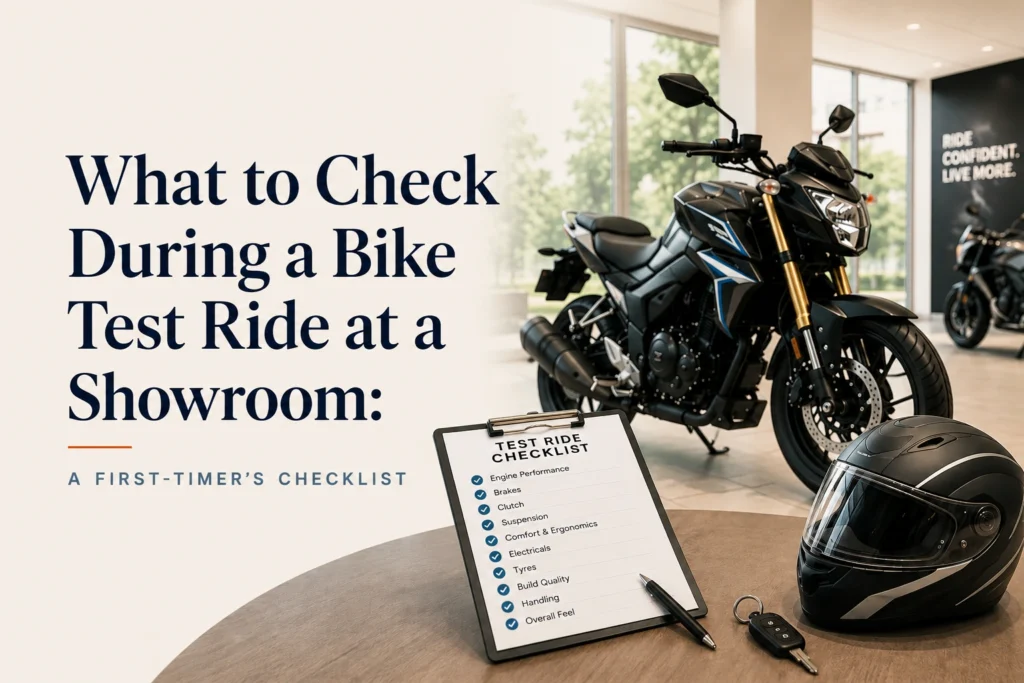
Your first bike test ride at a showroom is an exciting milestone, but it is also your best chance to catch problems before you commit to a purchase. Knowing what to check before buying a bike turns a quick spin around the block into a genuinely useful evaluation.
This bike test ride checklist walks through everything worth checking, from paperwork before you even sit on the bike to the questions you should ask once the ride is over.
1. Before You Arrive: Documentation and Safety Gear
Documentation and Requirements
- Valid government-issued ID, such as an Aadhaar card or driving licence.
- Proof of address, such as a utility bill or bank statement.
- A filled registration form, which most showrooms will ask for before the ride.
Safety Gear
- A certified helmet, non-negotiable regardless of how short the ride is.
- Gloves and modest, close-fitting clothing that will not catch on the bike’s controls.
2. Comfort and Ergonomics to Check First
- Seat height and softness: make sure the seat is comfortable and your feet reach the ground confidently.
- Handlebar position and flexibility: the reach should feel natural, not stretched or cramped.
- Pedal or footpeg position: confirm they sit level and comfortable for your feet.
3. Engine, Sound and Vibration Checks During the Ride
- Restarts and idling: the bike should restart smoothly and idle without hesitation.
- Meter accuracy: check that the speedometer, tachometer and fuel gauge all look accurate.
- Engine sound: listen for any unusual knocking, whining or rattling.
- Vibration: a well-engineered bike should not shake or buzz excessively at normal speeds.
4. Braking, Suspension and Handling
Braking System
- Test both front and rear brakes for smooth, controlled stopping power.
- If the bike has ABS or an instant brake assist, confirm it engages correctly.
Suspension and Handling
- Ride quality: the suspension should absorb bumps smoothly over different surfaces.
- Handling and stability: the bike should feel planted and predictable, especially around turns.
A test ride is not just about how the bike feels at speed. It is your only real chance to catch a rough gearbox, a soft brake, or an uncomfortable seat before you sign the papers.
5. Gearing, Throttle Response and a Final Ergonomics Recheck
- Gear changes: shifts should feel smooth, not jerky or notchy.
- Throttle response: the throttle should respond consistently and predictably at every speed.
- Seat comfort recheck: sit back and reassess comfort now that you have actually ridden the bike, since first impressions on a stationary bike can be misleading.
6. After the Test Ride: Questions to Ask Before You Buy
- Raise any ergonomic concerns with the showroom staff, since some adjustments are possible before delivery.
- Ask which accessories are standard versus optional, and whether any are mandatory add-ons.
- Review the purchase terms in full, including financing options, down payment and delivery timelines.
7. Frequently Asked Questions
Q: What documents do I need for a bike test ride?
A valid government-issued ID, proof of address, and a filled registration form provided by the showroom.
Q: What safety gear is required for a test ride?
A certified helmet is essential, and gloves along with modest, well-fitted clothing are strongly recommended.
Q: How do I properly check the brakes during a test ride?
Test the front and rear brakes independently at a safe, controlled speed, and confirm any ABS or brake assist features engage smoothly.
Q: What should I do if the bike vibrates during the test ride?
Note where and at what speed the vibration occurs, and raise it with the showroom staff. Excessive vibration at normal speeds can point to an engineering or maintenance issue.
Q: Can I test ride an electric bike the same way as a petrol bike?
Yes. An electric bike test ride follows the same checklist, though you should also check throttle response, regenerative braking feel, and how the bike behaves at low speed.
8. Conclusion
A test ride is where a bike either earns your confidence or reveals a dealbreaker. Working through this checklist, from documentation and safety gear to brakes, handling and throttle response, ensures you are judging the bike itself rather than a showroom sales pitch.