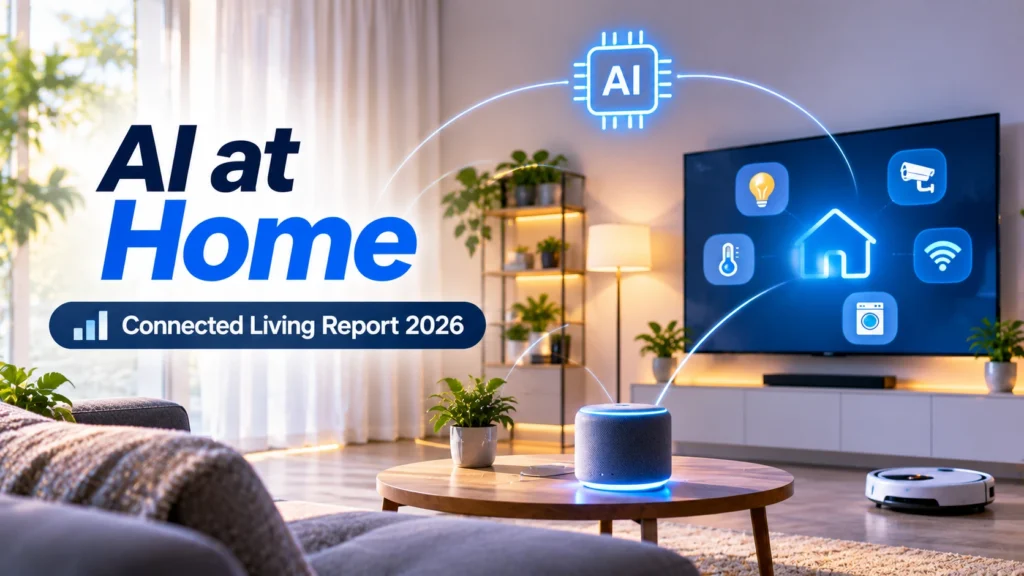
AI at Home: The Connected Living Report 2026
 Blogs
Artificial intelligence is gradually becoming part of everyday life, and its role is now expanding beyond smartphones and computers. From voice-controlled appliances to smart refrigerators and connected home systems, AI is changing how people manage their homes.
In 2026, technology companies are focusing on connected living, where appliances, entertainment devices and voice assistants work together to make everyday activities easier. Recent developments from Apple, Amazon and Samsung show how AI is making smart homes more interactive, personalised and convenient.
Let’s look at some of the latest developments shaping AI-powered homes.
1. Latest AI at Home Developments in 2026
Several technology companies have announced new products and platform updates aimed at improving connected-home experiences.
| Company | Latest development | Key highlight |
|---|---|---|
| Apple | HomeView | AI-powered home display with Siri |
| Amazon | Alexa+ in India | Conversational AI with Hindi and Hinglish support |
| Samsung | SmartThings Now | Personalised smart-home controls and automation |
Apple Introduces HomeView With Siri AI
On October 13, 2026, Apple announced HomeView, a new smart-home device designed to bring entertainment, communication and home management together.
The device features a 7-inch Liquid Retina display and an upgraded Siri AI experience powered by Apple Intelligence. Users can interact with Siri, make FaceTime calls, play music and manage compatible smart-home devices using voice commands.
One of its notable features is personalised access for household members. HomeView can recognise up to six people and display individual apps, widgets and personal information.
Apple has announced that HomeView will be available from November 13, 2026, in selected markets, including India.
Read the official Apple HomeView announcement for more details.
Amazon Brings Alexa+ to India With Hindi and Hinglish Support
Amazon introduced Alexa+, its upgraded generative AI-powered voice assistant, in India on September 16, 2026.
Unlike traditional voice assistants that depend heavily on specific commands, Alexa+ is designed to understand natural conversations, follow context and handle more complex requests.
Some of its key capabilities include:
- Controlling compatible smart-home appliances.
- Understanding Hindi and Hinglish.
- Managing supported everyday tasks through voice commands.
- Creating personalised smart-home routines.
- Helping users with shopping, music discovery and meal planning.
One interesting feature is its ability to understand requests based on context. For example, users can ask Alexa+ to make a room more comfortable, and it can adjust compatible smart-home devices accordingly.
Amazon has made Alexa+ available through an Early Access programme in India. It is free during this phase, subject to Amazon’s eligibility and access conditions.
Read the official Amazon Alexa+ India announcement.
Samsung Introduces SmartThings Now for Connected Homes
On October 7, 2026, Samsung announced SmartThings Now, an update to its connected-home platform designed to make managing smart devices more convenient.
The update introduces a redesigned Home tab that displays personalised information and device controls based on users’ routines and situations.
For example, SmartThings can suggest turning on lights or air purifiers when a user approaches home. Users can also create automated routines based on these suggestions.
Other improvements include:
- Personalised recommendations: Displays relevant information and device controls.
- Family Care: Helps users check in on family members through activity-related alerts.
- Local device control: Helps keep connected devices responsive during certain network disruptions.
- Expanded compatibility: SmartThings supports more than 430 Works with SmartThings-certified brands worldwide.
Read the official Samsung SmartThings update.
2. How AI Is Changing Everyday Home Appliances
AI is no longer limited to smart speakers and voice assistants. Appliance manufacturers are increasingly introducing intelligent features into everyday products.
Here are some areas where this technology is making a difference:
| Smart appliance | AI-powered capabilities | Everyday benefit |
|---|---|---|
| Smart refrigerators | Food recognition and inventory-related features | Helps manage ingredients and reduce food waste |
| AI-enabled air conditioners | Intelligent cooling adjustments | Supports personalised comfort |
| Smart washing machines | Fabric detection and cycle recommendations | Makes laundry management easier |
| Smart televisions | Picture optimisation and content recommendations | Improves entertainment experience |
| Smart security systems | Activity detection and connected alerts | Helps monitor the home remotely |
These features vary across manufacturers and models. Buyers should check the actual capabilities supported by an appliance before purchasing.
3. What These Developments Mean for the Future of Smart Homes
The latest announcements point towards a broader shift in how connected devices are being developed. Instead of simply responding to individual commands, smart-home systems are increasingly designed to understand context, recognise preferences and coordinate multiple appliances.
Here are some important areas to watch.
- Smarter energy management: AI-enabled appliances may help optimise energy consumption through intelligent settings and usage patterns.
- More natural voice interactions: Multilingual assistants can make connected devices easier to operate without requiring users to remember specific commands.
- Connected appliances: Different devices can communicate through shared platforms, making it easier to manage lighting, cooling, entertainment and security.
- Personalised experiences: Smart-home systems can adapt settings and recommendations based on household preferences and routines.
- Improved home monitoring: Connected security devices and automation systems can help users monitor their homes remotely and receive relevant alerts.
However, as more appliances collect information about household routines and preferences, privacy, cybersecurity and reliable connectivity will remain important considerations.
4. What to Consider Before Building an AI-Powered Smart Home
Smart-home technology can make everyday activities easier, but choosing compatible devices is important. Before investing in connected appliances, consider these factors:
- Device compatibility: Check whether your appliances support the same smart-home ecosystem, such as Apple Home or Samsung SmartThings.
- Voice assistant support: Make sure your devices work with your preferred assistant and language.
- Internet connectivity: A stable Wi-Fi connection is important for many connected-home features.
- Privacy and security: Check the manufacturer’s privacy policies, security features and software update support.
- Long-term costs: Consider subscriptions, additional hubs and other accessories that may be required.
A connected home does not need to be built all at once. Starting with a smart speaker, lighting system or connected appliance can help you understand which features are genuinely useful.
Final Thoughts
AI is gradually changing the way people interact with their homes. Developments such as Apple’s HomeView, Amazon’s Alexa+ and Samsung’s SmartThings ecosystem show that connected living is becoming more practical and accessible.
The next stage of smart-home technology will not simply be about adding AI to individual appliances. It will be about making different devices work together, understand everyday needs and simplify household routines.
As these technologies continue to develop, AI-powered homes could become more connected, efficient and personalised.