Masticating vs Centrifugal Juicer: How Much More Juice Do You Actually Get?
 Blogs
Blogs
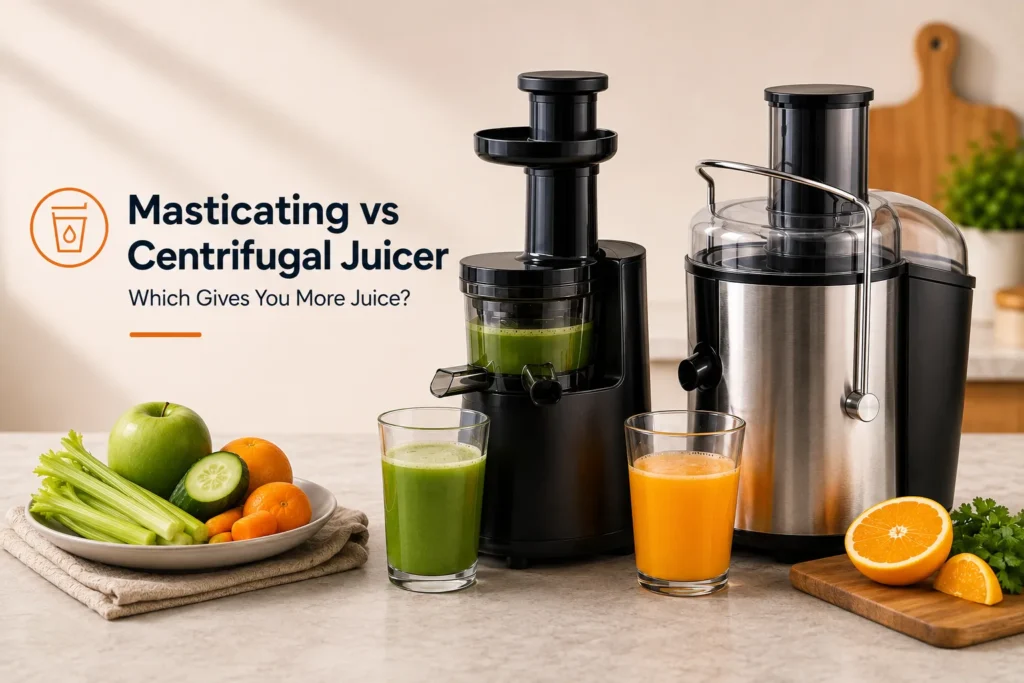
Juicers are everywhere now, used by fitness enthusiasts and busy professionals alike who want fresh juice at home. But when choosing between a masticating juicer and a centrifugal juicer, the real question is how much more juice you actually get, and whether that extra yield is worth the price difference.
Here is how the two technologies compare on yield, nutrition, and everyday convenience.
1. How Centrifugal Juicers Work
Centrifugal juicers use high-speed spinning blades to shred fruits and vegetables, spinning at 10,000 to 15,000 RPM to produce juice in seconds. This speed comes with more foam and oxidation, and the process extracts around 70 to 80 percent of available juice, leaving noticeably wetter pulp behind.
2. How Masticating Juicers Work
Masticating juicers use a slow auger that crushes and presses produce at just 40 to 100 RPM, mimicking a chewing motion. This gentler process produces less foam, richer flavour, and juice that lasts longer in the fridge, extracting around 85 to 95 percent of available juice and leaving much drier pulp.
3. Juice Yield Comparison
For leafy greens like spinach and kale, a masticating juicer extracts up to 40 percent more juice than a centrifugal model. For hard produce like carrots and beets, the difference is around 20 percent more. For soft fruits like oranges and apples, the gap narrows to roughly 10 to 15 percent. Over time, that extra yield adds up meaningfully, especially with expensive produce.
The real difference between these juicers is not just speed. A masticating juicer can pull 20 to 40 percent more juice from the same produce, and that adds up fast on a grocery bill.
4. Nutrient Retention and Convenience
Centrifugal juicing generates heat and oxidation that reduce vitamin C and enzyme content, while masticating juicing preserves more nutrients thanks to its slower extraction process. Masticating juice also tends to last longer, staying fresh for up to 72 hours when refrigerated.
On convenience, centrifugal juicers are faster, easier to clean, and cheaper upfront, typically priced between 5,000 and 10,000 rupees. Masticating juicers are slower with more parts to clean, and cost more upfront, usually 15,000 to 30,000 rupees or higher. Centrifugal wins on speed, while masticating wins on juice quality.
5. The 2026 Juicing Reality
Masticating juicers have become popular among health-conscious urban buyers, while centrifugal juicers remain attractive to busy professionals who want quick morning juice without much hassle. Many households now own both, using a centrifugal juicer for speed and a masticating juicer for weekend health routines.
6. Frequently Asked Questions
Q: Does a masticating juicer really produce more juice than a centrifugal juicer?
Yes. Masticating juicers extract 85 to 95 percent of available juice compared to 70 to 80 percent for centrifugal juicers, with the biggest gains on leafy greens.
Q: Which juicer preserves more nutrients, masticating or centrifugal?
Masticating juicers preserve more nutrients since their slower process generates less heat and oxidation, and the resulting juice also stays fresh longer.
Q: Is a masticating juicer worth the higher price?
If you juice daily and care about yield and nutrition, yes, the extra juice and nutrient retention typically justify the higher cost over time.
Q: Which juicer is faster, masticating or centrifugal?
Centrifugal juicers are significantly faster, producing juice in seconds thanks to their high-speed spinning blades, while masticating juicers work more slowly.
Q: How long does masticating juicer juice stay fresh?
Masticating juice can stay fresh for up to 72 hours when refrigerated, compared to centrifugal juice, which oxidizes and degrades faster.
7. Conclusion
Centrifugal juicers are fast and affordable, but masticating juicers deliver 20 to 40 percent more juice along with better nutrient retention. If you juice daily and care about health, the extra yield and nutrition make masticating worth the investment. If speed and budget matter more, centrifugal remains a solid choice.
Compare masticating and centrifugal juicer models on Livora before you buy.