How Much RAM Does Your Next Smartphone Actually Need in 2026?
 Blogs
Blogs
The smartphone market in 2026 is louder than ever, with brands pushing devices packed with massive hardware specifications. If you are shopping for a new device, you have likely seen models boasting 12GB, 16GB, or even 24GB of memory, which raises a critical question for your wallet: how much RAM does a phone actually need to handle daily tasks without slowing down?
Understanding how smartphone RAM interacts with your apps helps you avoid overpaying for marketing hype. More memory sounds better on paper, but the reality of mobile operating systems means much of that extra space often sits idle.
1. What Does Smartphone RAM Actually Do?
To understand your needs, it helps to understand what phone RAM does. Random Access Memory acts as your device’s short-term memory, holding the data of your currently open apps, system services, and background processes so the processor can access them instantly.
When you switch from a mobile game to a text message and then back to the game, RAM is what keeps the game from restarting. If your device runs low on memory, the operating system is forced to close older background apps to free up space.
2. RAM vs Processor: Which Matters More
When evaluating performance, buyers often confuse memory capacity with raw speed. In the debate of RAM vs processor, which matters more, the processor is the clear winner for true speed.
- The processor (CPU/GPU) is the brain of the phone. It determines how fast web pages load, how quickly videos render, and how smoothly games run.
- The RAM is simply the workspace. Having a bigger workspace does not make the worker faster, it just means more tools can be held at once.
If you pair a weak, budget processor with 16GB of RAM, the phone will still lag when opening heavy apps. Conversely, a flagship processor paired with an efficient amount of memory will feel lightning-fast. RAM only prevents slowdowns caused by multitasking, it does not boost the baseline speed of your chip.
More RAM only prevents slowdowns from multitasking, it does not make your phone faster. The processor decides speed, the RAM just decides how much you can hold open at once.
3. Does More RAM Mean Better Phone Performance
The short answer is: up to a point. Whether more RAM means better phone performance depends entirely on your usage patterns. If your daily routine consists of scrolling social media, checking emails, streaming music, and browsing the web, your phone rarely uses more than a few gigabytes at a time. Once you have enough memory to hold your daily apps in the background, adding more offers little noticeable benefit, and the extra gigabytes largely sit empty.
4. Is 8GB RAM Enough for a Smartphone in 2026
As we move through 2026, mobile operating systems like Android and iOS have become highly optimised. For the vast majority of consumers, the answer to whether 8GB RAM is enough for a phone is yes, 8GB remains the sweet spot for standard users.
With 8GB of memory, your device can comfortably keep a dozen standard apps open simultaneously. You can navigate using GPS, stream a podcast, and flip back to a web browser without experiencing aggressive app closures. For iOS devices, Apple’s closed ecosystem manages memory even more strictly, making 8GB feel incredibly robust. Unless you are pushing your device to extreme limits, 8GB provides a smooth, stutter-free experience.
5. How Much RAM for Gaming on a Phone
Mobile gaming has evolved rapidly, with heavy titles demanding desktop-grade graphics, so figuring out how much RAM for gaming on a phone you actually need is worth a closer look.
- Casual gaming: puzzle games or light arcade titles run perfectly on 6GB or 8GB.
- Competitive or heavy gaming: for massive open-world games or high-frame-rate shooters, 12GB is the ideal target in 2026.
Heavy games need significant memory to store high-resolution textures and map data. While a game might technically run on an 8GB phone, stepping up to 12GB ensures background system tasks do not interrupt gameplay or cause sudden frame drops during intense moments.
6. The 2026 Recommendation Guide
When asking yourself how much RAM you need in a smartphone, look closely at your habits rather than the box specs:
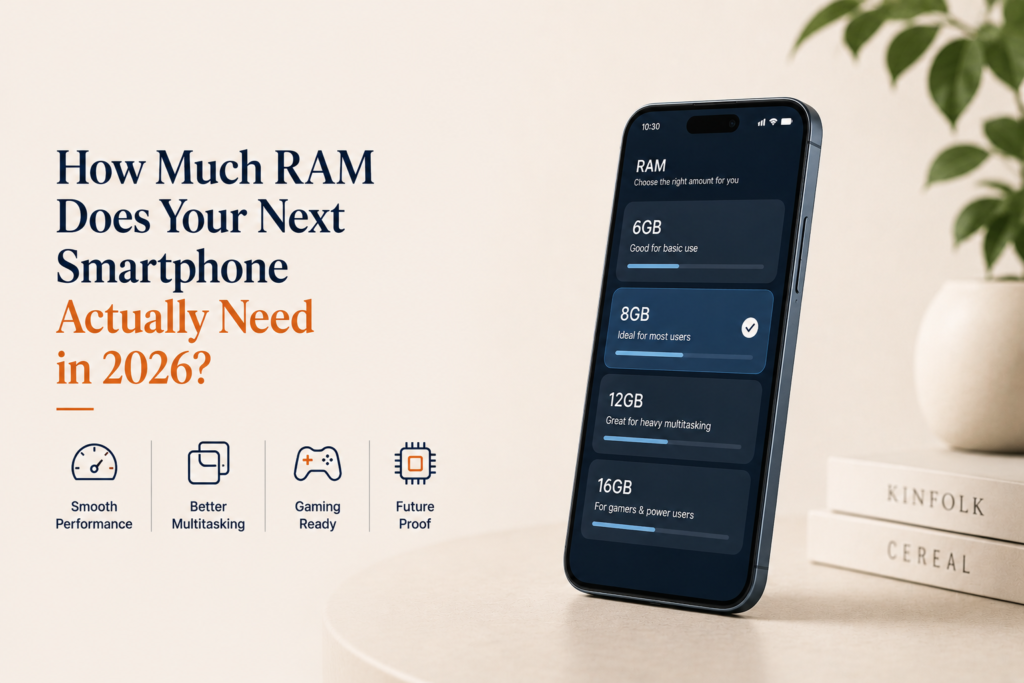
- 4GB to 6GB (budget tier): suitable for basic communication, light web browsing, and users who do not multitask heavily.
- 8GB (the mainstream standard): perfect for 90 percent of users, handling heavy multitasking, social media, content creation, and everyday productivity with ease.
- 12GB (the power user tier): ideal for heavy mobile gamers, people who shoot and edit 4K video directly on their phones, or those using desktop-mirroring modes.
- 16GB and beyond (the marketing trap): mostly unnecessary unless you run virtual machines on your phone, this tier mainly exists to inflate retail prices.
7. Frequently Asked Questions
Q: Is 8GB RAM enough for a smartphone in 2026?
Yes, for the vast majority of users. 8GB comfortably handles multitasking, social media, and everyday apps on both Android and iOS.
Q: Does more RAM make a phone faster?
Not directly. RAM prevents slowdowns from multitasking, but the processor determines the actual speed of the device.
Q: How much RAM do I need for mobile gaming?
6GB to 8GB is enough for casual games, while 12GB is the ideal target for heavy, graphics-intensive titles in 2026.
Q: Is 16GB of RAM worth paying extra for?
For most users, no. Unless you run virtual machines or extremely demanding workloads on your phone, 16GB and above rarely adds noticeable everyday benefit.
Q: What matters more for smartphone performance, RAM or processor?
The processor matters more for raw speed. RAM only determines how many apps and processes can be held in the background without slowdowns.
8. Conclusion
Do not let manufacturers convince you that bigger numbers always equal a better daily experience. Prioritise a high-quality processor, excellent battery life, and long-term software support over excessive RAM.