Are You Paying for Smartphone Features You’ll Never Use?
 Blogs
Blogs
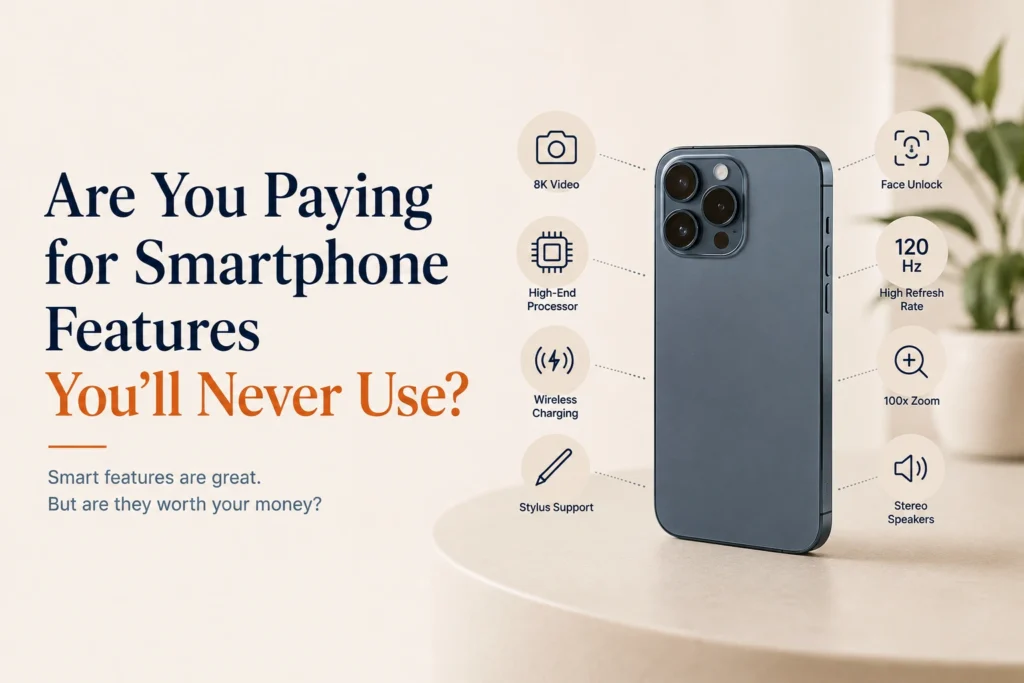
Many buyers waste money on premium devices by paying for smartphone features you’ll never use, such as extreme camera zooms, curved glass edges, and AI hype. Manufacturers are experts at making a smartphone features list look impressive on paper, even when half the entries make no real difference to daily use.
This guide separates true utility from smartphone features that are just marketing, so you can spend your money on the parts of a phone that actually improve your day-to-day experience.
1. The Illusion of High-End Smartphone Specs
Makers push huge numbers to make phones look better than they are. High processor counts and huge memory sizes sound great on paper, but everyday tasks do not need them.
- Megapixel inflation: a high megapixel count does not equal clearer photos, lens quality and light sensors matter more.
- Extreme zoom: distant zoom modes blur quickly unless the phone is mounted on a tripod.
- Curved screens: they look sleek, but lead to accidental touches and easier cracks.
- Excess RAM: 8GB is plenty for most people, and 16GB is mostly wasted on mobile OS limits.
2. Which Smartphone Features Are Worth Paying For
Instead of falling for marketing tricks, focus on the parts of the device that improve daily life. Deciding which smartphone features are worth paying for really comes down to battery life, storage space, and update longevity.
- All-day battery: look for real-world battery tests over fast-charging claims.
- Sufficient storage: pick 128GB or 256GB depending on your photo and video habits.
- Software support: buy brands that promise five or more years of updates.
- Build quality: water resistance and sturdy glass protect your investment.
A long smartphone features list looks impressive in a store. It rarely matches how you actually use your phone once you get it home.
3. Do You Need Flagship Smartphone Features
Top-tier phones cost double or triple what mid-range options cost. Asking whether you really need flagship smartphone features can save you a significant amount of money, since mid-range choices now handle social media, navigation, and casual gaming with ease.
- Cost difference: flagships often cost far more than mid-rangers, which can offer most of the performance for a fraction of the price.
- Diminishing returns: processor speed gains from year to year are barely noticeable to normal users.
- Unused power: heavy gaming chips sit idle during web browsing and messaging.
4. How to Spot Marketing Gimmicks
Brands use flashy names for fairly basic tools. Learning to spot smartphone features you’ll never use protects your wallet. If a function needs a long explanation in an advertisement, it is likely a gimmick.
- Unproven AI tools: moving objects in photos or live translation are often done better by dedicated apps.
- Refresh rate hype: 120Hz screens use more battery, and the jump from 90Hz is hard to notice.
- Back glass panels: glass backs break easily and mainly exist to push wireless charging over durability.
5. Frequently Asked Questions
Q: What smartphone features are usually just marketing?
Extreme camera zoom, curved screens, excess RAM beyond 8GB, and unproven AI camera tricks are among the most common smartphone features that add cost without adding real daily value.
Q: Which smartphone features are actually worth paying for?
All-day battery life, sufficient storage for your habits, long-term software update support, and solid build quality tend to matter far more than headline specs.
Q: Do I need a flagship phone, or is mid-range enough?
For most people, a mid-range phone handles social media, navigation, and casual gaming with ease, at a fraction of a flagship’s price.
Q: Is more RAM always better for a smartphone?
No. 8GB is plenty for the vast majority of users, and going beyond 16GB rarely improves real-world performance on a mobile operating system.
Q: How can I spot a marketing gimmick when buying a phone?
If a feature needs a long explanation in an advertisement, or promises something a dedicated app already does better, it is usually more hype than substance.
6. Conclusion
Choosing a smart device should be based on real needs rather than a long spec sheet. Look closely at the smartphone features that affect your day, such as battery, storage, and software support, and ignore the rest.
Looking for your next smartphone? Explore our smartphone guides and comparisons to understand storage, camera features, charging speeds and other specifications before you buy.