Fast Charging Watts Explained: Is 80W Actually Better Than 33W for Your Phone?
 Blogs
Blogs
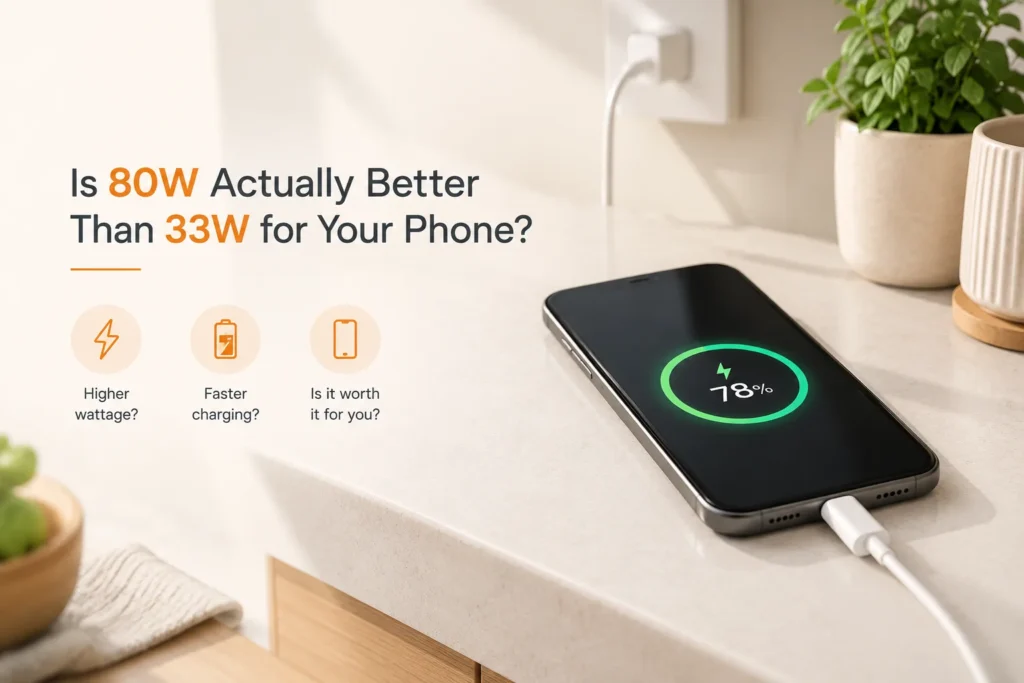
Smartphone brands love to advertise fast charging watts like 33W, 65W, 80W, and even 120W, but what do these numbers really mean for you? Is an 80W charger genuinely better than a 33W charger, or is it mostly marketing hype?
Here is the science behind these numbers, the real-world charging experience, and what actually matters most for your daily charging routine.
1. What Fast Charging Watts Really Means
A watt is simply voltage multiplied by current, and it represents how much power is delivered to your battery. Higher wattage means more power delivered in less time. A 33W charger delivers 33 watts of power, while an 80W charger delivers more than double that.
2. Charging Speed in Real Life
A 33W charger typically takes a 5000mAh battery from 0 to 100 percent in around 70 to 80 minutes. An 80W charger can charge the same battery in roughly 30 to 35 minutes. The difference is most noticeable when you need a quick top-up during the day, rather than during a full overnight charge where speed matters far less.
An 80W charger is not just a bigger number on the box. It can cut a full charge from over an hour to about half an hour, though that speed comes with a small trade-off in long-term battery wear.
3. Heat and Battery Health
Higher wattage generally means more heat, and excess heat can degrade battery health over time. Modern phones counter this with split batteries, advanced cooling, and AI-based charging management to reduce the damage. As a result, 80W charging is safe when managed properly, though long-term battery wear tends to be slightly higher compared to slower charging speeds.
4. Daily Usage Scenarios
- Office commuter: 33W is enough if you charge the phone overnight.
- Heavy user: 80W is genuinely useful when you need fast top-ups during a busy day.
- Traveler: 80W helps significantly when charging on the move at airports or cafes.
- Casual user: 33W is more than sufficient for light, everyday usage.
5. Compatibility and the 2026 Charging Reality
Fast charging requires certified cables, and using the original charger ensures you actually get the maximum advertised speed. Not all universal chargers support 80W, and many cap out at 33W or 65W instead.
Phones now average 5000 to 6000mAh batteries, making fast charging more relevant than ever, especially with gaming, streaming, and 5G usage draining batteries faster. As a simple decision rule, if you value convenience and speed, 80W is the better choice. If you prioritise battery longevity above all else, 33W is the safer option.
6. Frequently Asked Questions
Q: Is 80W fast charging actually better than 33W?
For speed, yes, an 80W charger can fill a 5000mAh battery in about 30 to 35 minutes versus 70 to 80 minutes for 33W. For battery longevity, 33W puts slightly less long-term strain on the battery.
Q: Does fast charging damage phone battery health?
Higher wattage generates more heat, which can degrade battery health slightly faster over time, though modern phones use cooling and AI charging management to reduce this effect.
Q: Do I need a special cable for fast charging?
Yes. Fast charging requires certified cables, and using the original charger that came with your phone ensures you get the maximum advertised charging speed.
Q: Can any charger deliver 80W to my phone?
No. Many universal chargers cap out at 33W or 65W, so you need a charger and cable both rated to support 80W to actually reach that speed.
Q: Is 33W charging enough for daily use?
For most casual users and anyone who charges overnight, 33W is more than sufficient and puts less long-term strain on the battery.
7. Conclusion
Fast charging is not just about the number on the box, it is about your lifestyle. Understanding fast charging watts can help you see why an 80W charger delivers blazing speed, ideal for power users and travelers, while a 33W charger is slower but gentler on the battery, well suited to overnight charging. The best choice depends on how you actually use your phone day to day.