Wet Grinder vs Mixer Grinder: Which One Is Truly Essential?
 Blogs
Blogs
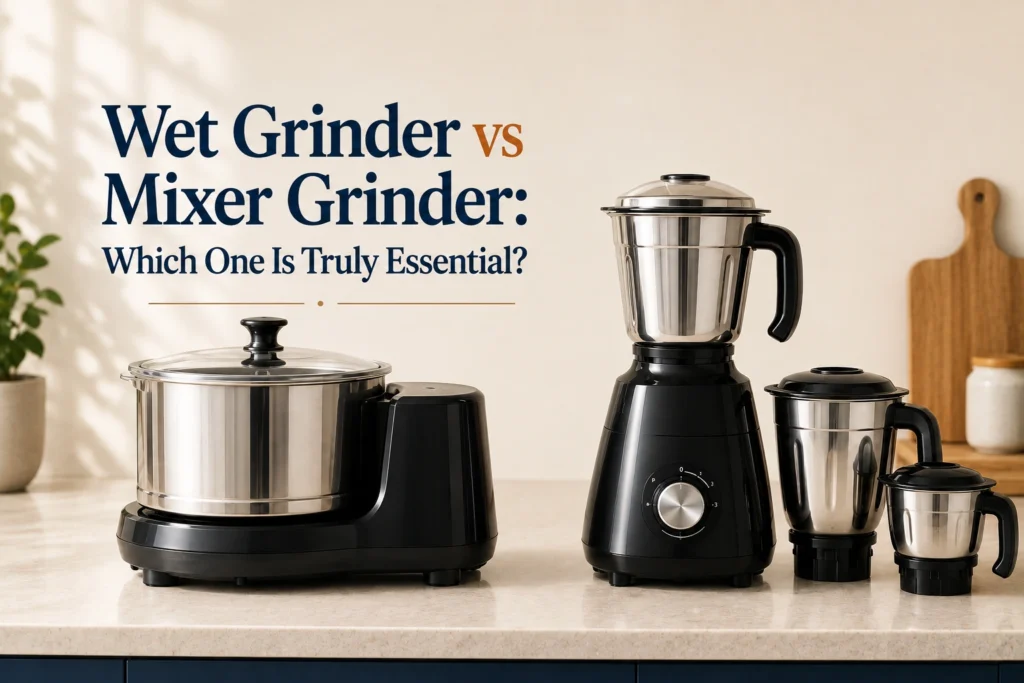
Traditional South Indian kitchens have long relied on a dedicated wet grinder for idli and dosa batter, while modern mixer grinders promise to handle nearly every grinding task under one roof. This has left many home cooks asking a genuine question: in a wet grinder vs mixer grinder comparison, do you actually need both appliances, or can one replace the other?
The honest answer depends on how frequently you make fermented batters versus dry chutneys, spice powders and quick blends. Here is exactly how these two appliances differ mechanically, where each one excels, and which one is truly essential for your kitchen.
1. How a Wet Grinder Works
A traditional wet grinder uses large, slow-rotating granite stones or rollers inside a stainless steel drum. This gentle, low-speed grinding action generates minimal heat, which is critical for fermentation because heat can kill the natural yeast and bacteria needed for batter to rise properly. The result is a light, fluffy, well-aerated batter, ideal for soft idlis and crisp dosas.

2. How a Mixer Grinder Works
A mixer grinder uses small, extremely fast-spinning stainless steel blades housed inside a sealed jar. This high-speed action generates significant friction and heat, which is perfectly fine for chutneys, spice powders, and quick blends but works against the slow fermentation process needed for idli and dosa batter.
3. Wet Grinder vs Mixer Grinder for Idli and Dosa Batter
If idli and dosa are a regular part of your weekly meals, a wet grinder produces noticeably better results. The slow stone-grinding action incorporates more air into the batter, producing a lighter, fluffier texture that a high-speed mixer grinder jar simply cannot replicate, since it tends to compress the batter and generate heat that can affect fermentation quality.
A wet grinder is not a luxury for households that make idli and dosa often. It is the difference between a passable batter and one that ferments into something genuinely light and fluffy.
4. Wet Grinder vs Mixer Grinder for Chutneys, Spices and Quick Blends
For daily chutneys, dry spice powders, or quickly blitzing a small batch of ingredients, a mixer grinder is far more practical. It functions more like a mixer grinder food processor, with multiple jars for wet grinding, dry grinding and chopping, and completes tasks in seconds rather than the 20 to 40 minutes a wet grinder typically needs to process a batch.
A mixer grinder chopper attachment also lets you finely chop vegetables, an added convenience a traditional wet grinder cannot offer at all.
5. Do You Need Both Appliances
- You need a wet grinder if idli, dosa or vada batter is a frequent part of your household’s meals and you want authentic, restaurant-quality texture.
- You can skip the wet grinder if you rarely make fermented batters at home, or are comfortable with the slightly denser texture a mixer grinder produces.
- You always need a mixer grinder regardless of your batter habits, since it handles the daily essentials of chutneys, spice powders and quick blending that a wet grinder simply cannot do.

6. Frequently Asked Questions
Q: Can a mixer grinder replace a wet grinder for idli batter?
It can produce usable batter, but the texture will generally be denser. A wet grinder’s slow stone-grinding action creates a lighter, more aerated batter that ferments better.
Q: Is a wet grinder necessary if I rarely make idli or dosa?
No. If fermented batters are not a regular part of your cooking, a mixer grinder alone can meet most of your grinding needs.
Q: Why does a wet grinder produce fluffier batter than a mixer grinder?
Its slow-rotating stones generate minimal heat and incorporate more air into the batter, both of which support better fermentation and a lighter texture.
Q: Can a mixer grinder be used as a food processor?
Many modern mixer grinders include multiple jars and chopper attachments that handle basic food processor tasks like chopping vegetables and blending.
Q: Which appliance is faster, a wet grinder or a mixer grinder?
A mixer grinder is much faster for most tasks, completing jobs in seconds compared to the 20 to 40 minutes a wet grinder typically needs for a batch.
7. Conclusion
For households serious about authentic idli and dosa batter, a wet grinder remains genuinely essential alongside a mixer grinder for everyday chutneys and spices. For everyone else, a good mixer grinder alone covers most daily grinding needs.