Are Copper Water Bottles Safe for Daily Use? What You Should Know Before Buying
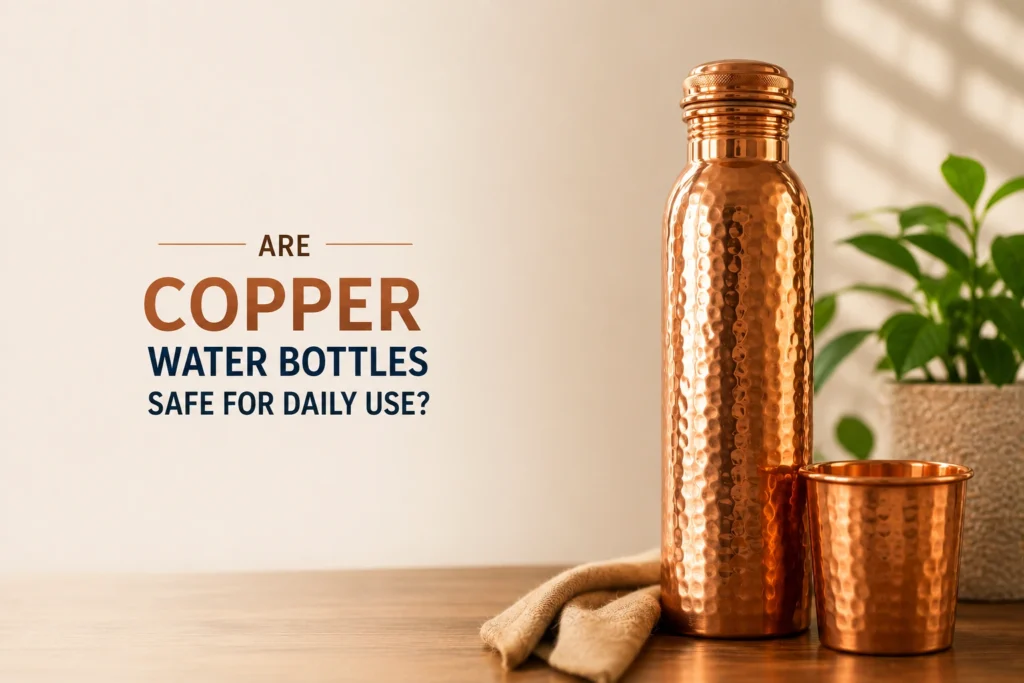 Blogs
Blogs
Storing drinking water in copper vessels is an ancient Indian tradition deeply rooted in Ayurveda. In recent years, this practice has made a strong comeback, with copper water bottle replacing plastic bottles on office desks and in gym bags across the country.
But as copper bottles become a mainstream lifestyle trend, a fair question comes up: is a copper water bottle actually safe for daily use, or does it come with hidden health risks? Here is a science-backed guide to copper bottle benefits and risks, how to use one correctly, and how it compares to modern alternatives.
1. Is a Copper Bottle Good for Health?
Ayurveda suggests that water stored in a copper vessel, known as Tamra Jal, can help balance the three doshas in the body: Vata, Pitta, and Kapha. From a more scientific angle, when water sits in copper, tiny amounts of copper ions dissolve into the liquid. This process is called the oligodynamic effect.
The primary health benefits associated with this natural process include:
- Natural antimicrobial action: Copper ions can help destroy harmful bacteria, E. coli, and waterborne pathogens, acting as a natural purification layer
- Boosted digestion: Copper helps stimulate peristalsis, the movement of digestive tract muscles, and may reduce stomach inflammation while improving nutrient absorption
- Antioxidant and anti-aging properties: Copper plays a role in cell regeneration, fighting free radicals, and supporting melanin production, the pigment that helps protect skin
2. How Long to Store Water in a Copper Bottle Safely
Copper is a heavy metal. While the body needs trace amounts of it to function, too much can be genuinely harmful. Understanding how long to store water in a copper bottle safely is the most important factor in avoiding any issues.
- The golden window: Water should be stored for a minimum of 6 hours and a maximum of 8 to 12 hours to absorb the beneficial properties
- The best routine: Fill your copper bottle at night, let it sit on your bedside table overnight, and drink the water first thing in the morning on an empty stomach
- The danger zone: Avoid storing water in a copper vessel for more than 12 to 14 hours. Leaving water in the bottle for days causes copper levels in the water to rise well beyond safe drinking limits
3. Copper Water Bottle Side Effects and Risks
Using a copper bottle incorrectly can turn a healthy habit into a genuine health concern. To be clear, a copper water bottle is safe for daily use, but only if you fill it exclusively with plain, room-temperature water.
Copper Toxicity and Liver Strain
Drinking water that has been over-infused with copper can lead to mild toxicity, with symptoms including nausea, abdominal cramps, vomiting, and diarrhoea. Over a prolonged period, significant copper overloading can contribute to liver damage and kidney complications.
Acidic Reactions: The One Rule to Never Break
Copper reacts aggressively with acids. Never put organic liquids like lemon water, honey-lemon water, fruit juices, milk, or tea into a copper bottle. The acidic nature of these liquids corrodes the inner walls, leaching much larger, unsafe amounts of copper compounds directly into the beverage.
A copper bottle is not a general-purpose water container. It works best as a wellness tool, used with plain water and clear time limits, not as an all-day bottle for every drink.
4. Copper Bottle vs Stainless Steel Bottle: A Comparison
If you are choosing a daily companion for your hydration needs, here is how copper and stainless steel bottles compare.
| Feature | Copper Bottle | Stainless Steel Bottle |
| Primary purpose | Therapeutic / Ayurvedic use | Pure hydration and temperature control |
| Versatility | Plain, room-temperature water only | Hot tea, coffee, lemon juices, cold water |
| Maintenance | High, needs frequent scrubbing with lemon or tamarind | Low, standard dish soap wash |
| Durability | Prone to dents, tarnishing, and oxidation | Highly durable, shockproof, scratch-resistant |
5. How to Use Copper Bottles Safely
A copper bottle is best treated as a wellness tool rather than an everyday water container. It is safe and beneficial when you follow a few simple rules.
- Limit consumption: Drink only 1 or 2 glasses of copper-infused water per day, preferably in the morning, rather than all day long
- Take breaks: Drink copper water for 2 to 3 months at a stretch, then take a 1-month break to let your body naturally flush out any excess metal
- Keep it clean: Copper naturally oxidizes and turns green or black inside. Scrub the interior twice a week using a paste of salt and lemon juice, or tamarind, to expose the clean metal underneath
6. Frequently Asked Questions
Is it safe to drink water from a copper bottle every day?
Yes, as long as you fill it only with plain, room-temperature water and store it for no more than 8 to 12 hours before drinking. Daily use within these limits is considered safe and is the traditional Ayurvedic practice.
Can I put lemon water or juice in a copper bottle?
No. Copper reacts aggressively with acidic liquids like lemon water, fruit juices, milk, and tea, causing the metal to leach into the drink in much larger, unsafe amounts. Copper bottles should only be used for plain water.
What happens if I drink water that has been stored in copper for too long?
Water left in a copper bottle for more than 12 to 14 hours can accumulate copper levels beyond safe limits, which may cause nausea, cramps, vomiting, or diarrhoea, and long-term overexposure can strain the liver and kidneys.
Is a copper bottle better than a stainless steel bottle?
It depends on the purpose. A copper bottle is better suited as a wellness tool for plain water in the morning, while a stainless steel bottle is more practical and durable for all-day, all-beverage daily use.
How often should I clean a copper water bottle?
About twice a week. Since copper naturally oxidizes and can turn green or black inside, scrubbing it with a paste of salt and lemon, or tamarind, keeps the interior clean and safe for continued use.
7. Conclusion
Copper water bottles carry a long-standing place in Indian wellness tradition, and used correctly, they offer genuine benefits backed by both Ayurveda and basic science. The key is treating a copper bottle as a wellness tool rather than an everyday water container: fill it only with plain water, respect the 8 to 12 hour storage window, and clean it regularly. Follow these rules, and a copper bottle can be a safe, simple addition to your daily routine.